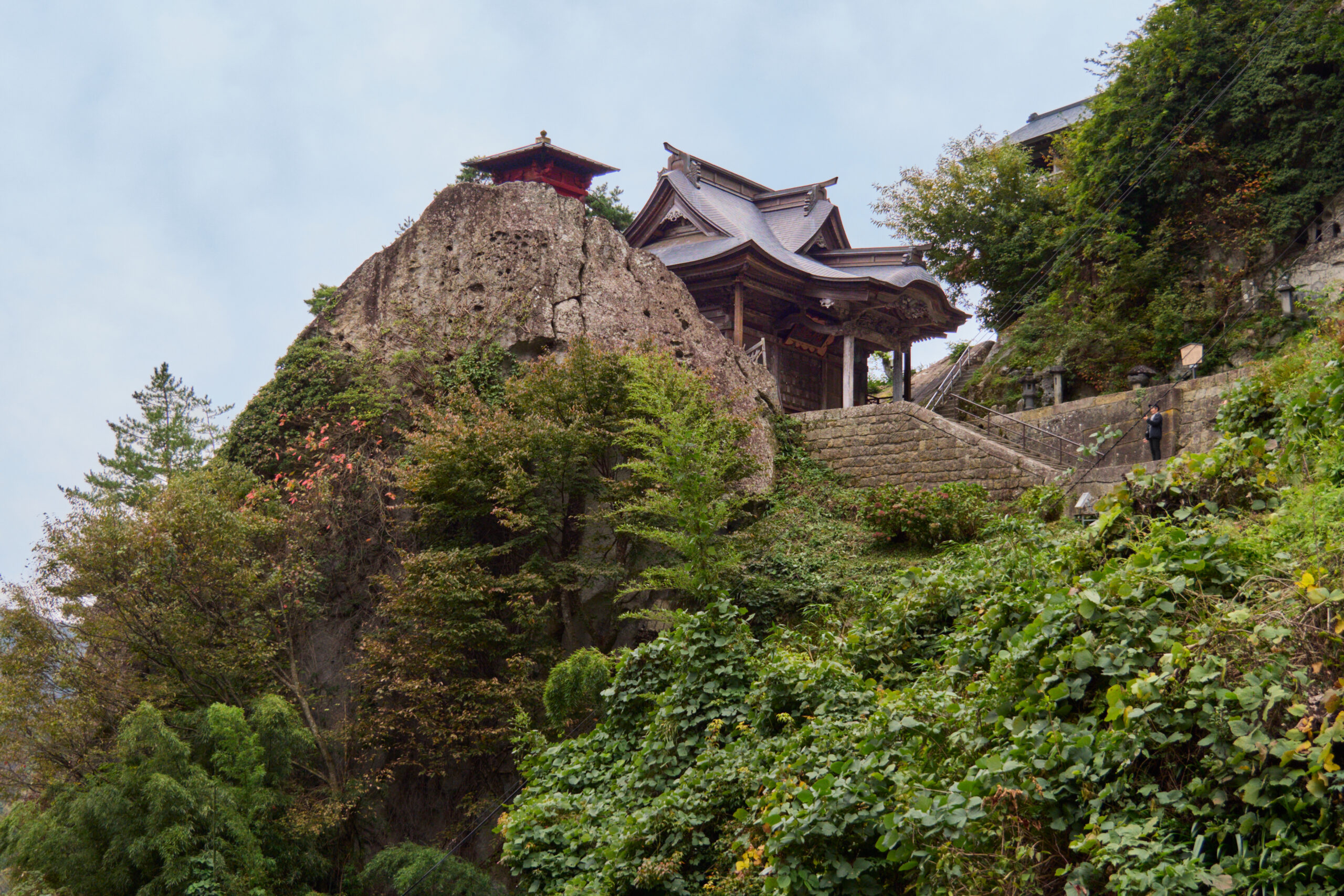
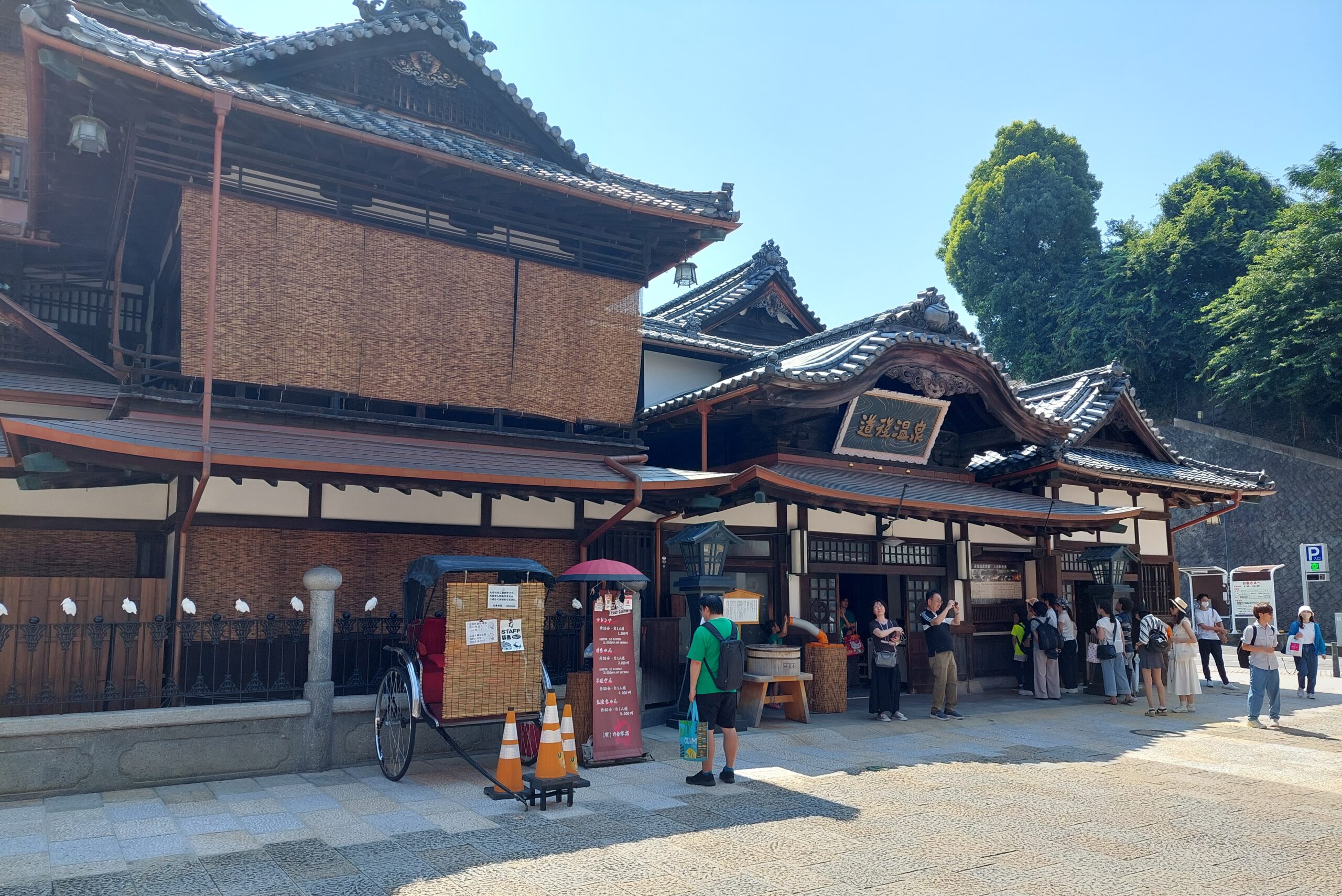
Dazaifu Tenmangu and Kyushu National Museum work well as a paired outing when you give each a reason to be there. The shrine is a living place of worship; the museum offers a different way into Japan's cultural connections with Asia. Decide which matters most before setting the order. A short shrine stop with an automatic museum purchase can be less satisfying than a deliberate visit to one, while a museum-focused day needs more than the time left after shopping.
- Choose the exhibition before choosing the ticket
- Use current shrine notices rather than a temporary-hall photograph
- Two visitors found the museum worthwhile in different ways
- Let closing time determine the order when needed
- Treat the approach as walking, not just a station transfer
- Make one shared decision before leaving Fukuoka
- Facility and shop information
Choose the exhibition before choosing the ticket
Start with Kyushu National Museum's current exhibition calendar. The Cultural Exchange Exhibition and a special exhibition are different ticket choices. As checked on October 19, 2026, the museum's adult admission to the Cultural Exchange Exhibition is JPY700. Its visitor information says a special-exhibition ticket also includes that hall, so buying both separately may be unnecessary. Check the particular exhibition and date before paying.
There is also a JPY1,000 combination ticket for the Cultural Exchange Exhibition, Dazaifu Tenmangu Museum and Kanko History Museum. These are three venues, not three names for the national museum. It is useful only if you want the included visits and can fit their actual opening arrangements into the day. Do not buy a combination simply because its headline saving looks attractive when you only want one exhibition.
Use current shrine notices rather than a temporary-hall photograph
The shrine's current Japanese grounds guide labels the temporary hall as being dismantled. That matters when planning from photographs taken during the main hall's renovation. Do not make seeing its tree-covered roof the purpose of a present-day trip without checking the shrine's latest notice. The current news index also carries a September 19, 2026 notice about worship from the front of the main hall.
Use the grounds map and instructions on the day, especially where construction affects circulation. Ordinary worship and a formally arranged prayer ceremony are different activities. If a particular ceremony is your reason for coming, ask about its present venue rather than assuming it happens exactly where an older article describes. Keep the actual worship space free for people praying, and make photographs a secondary part of moving through the grounds.
Two visitors found the museum worthwhile in different ways
Jane's Midlife Journey describes switching the order of a Dazaifu outing because the shrine was crowded, going to the museum first. The writer admired the approach and imposing building but found the exhibition less impressive than that arrival suggested. In a separate account published in December 2025, 足袋の旅人 describes a 2024 visit and values the museum's architecture, cultural-exchange exhibits and hands-on elements.
Both accounts make the building and approach part of the experience. They differ over how much the collection rewarded their attention. The second writer's interactive displays belong to that historical visit and are not a promise about today's rooms. JAPANOVA's recommendation is to look at the current exhibition subjects before deciding to pay, rather than treating either an enthusiastic visit or a disappointed one as a universal verdict.
Let closing time determine the order when needed
The museum lists regular opening from 09:30 to 17:00, with last entry at 16:30; special-exhibition arrangements can differ. It is normally closed on Mondays, with a holiday exception that moves the closure to the following working day. Check the actual calendar rather than treating a generic weekday rule as a guarantee. A shrine-first route that arrives near final admission can leave too little time for the exhibition you bought.
If the museum is your priority, protect its visit first and fit shopping or a meal around it. If worship is the main purpose, start there and decide whether the museum still fits comfortably. Weather and crowds can also justify switching the order. Neither order makes sense if it forces your party to hurry through the part they actually wanted. Plan a meal break separately from the time spent in exhibition rooms.
Treat the approach as walking, not just a station transfer
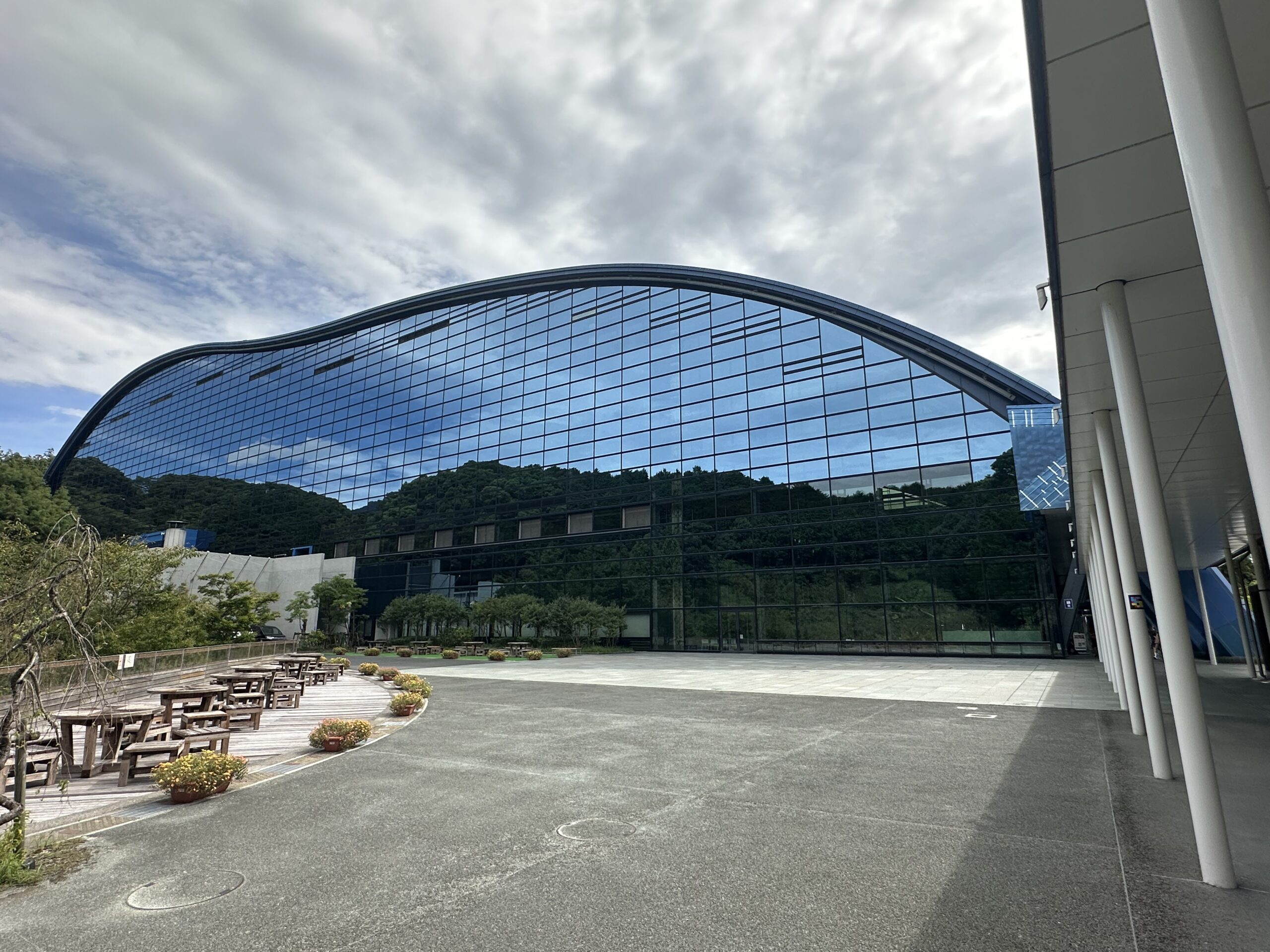
The museum stands beyond the shrine area, with a signed connection using escalators and a pedestrian tunnel. Follow current signs for the route rather than assuming every path behind the shrine leads to the same entrance. If steps, slopes or an escalator outage affect your party, check the museum's current access guidance before setting out. The exterior photograph here shows the museum in September 2024; it does not establish today's access route or exhibition.
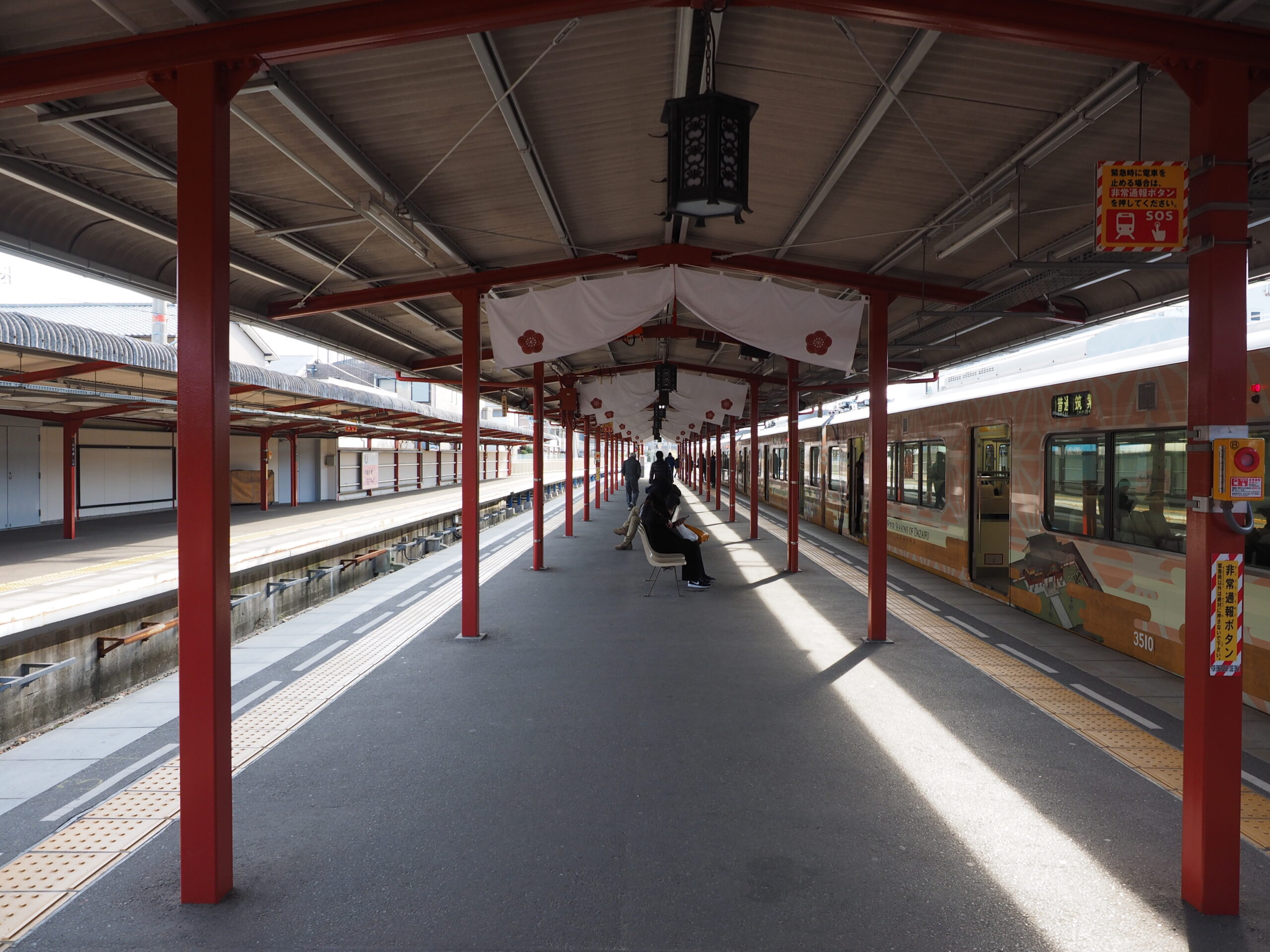
The second photograph records Dazaifu Station's central platform in January 2019. It is arrival context, not a current service map or evidence of a direct train from whichever Fukuoka station you use. Check your own starting station and any change of train with the operator. On the return, leave room for finding the correct departure rather than spending your final minutes at a shop because the map distance looked short.
Make one shared decision before leaving Fukuoka
Agree on a main purpose: worship, a named exhibition or a slower combination of both. Then choose your ticket, check closures and decide how much time you want for the approach street. That conversation is particularly useful when one traveler loves museum labels and another mainly wants architecture and a shrine walk. Splitting attention thoughtfully is better than buying admission that half the group will resent.
Choose a shrine-centered outing if its grounds and worship matter most. Choose a museum-centered visit when the current collection or special exhibition interests you enough to protect reading time. Pair them when both have a clear place in the day. Before leaving, save the current shrine map, museum calendar and return journey. Those decisions keep spending tied to your interests instead of to an inherited list of Dazaifu stops.
Research-based guide prepared by JAPANOVA. Traveler accounts are individual self-reports; comparisons are editorial analysis.
Facility and shop information
- Kyushu National Museum visitor information — checked 2026-10-19
- Kyushu National Museum — checked 2026-10-19
- Dazaifu Tenmangu grounds guide — checked 2026-10-19
- Dazaifu Tenmangu notices — checked 2026-10-19
- Kyushu National Museum official photo guide — checked 2026-10-19