Tsuruga Castle in Aizuwakamatsu can be an exterior-and-grounds stop or the anchor for a more focused history visit. Decide which you want before buying a combined ticket or adding another attraction. The keep contains a museum; an outside photograph and an inside visit answer different questions. Give the castle a clear role in the day rather than fitting it between several distant stops and hoping the details will work themselves out.
- Choose a museum visit or a deliberate exterior stop
- Read the ticket inclusions before choosing a combination
- Two accounts show different reasons to look closely
- Use the grounds to understand the wider setting
- Work backward from the last admission, not closing time
- Make one Aizu extension earn its place
- Facility and shop information
Choose a museum visit or a deliberate exterior stop
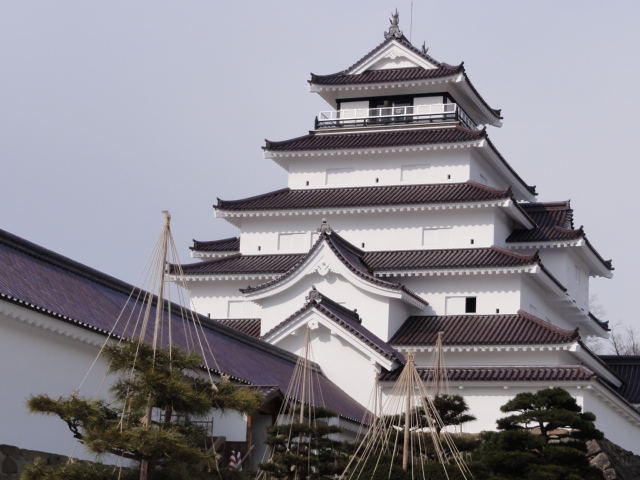
If you want context for what you are looking at, protect time for the museum and reading its explanations. If your interest is the shape of the keep and the surrounding landscape, begin with the outside and decide whether admission adds something you want. Neither choice requires you to claim expertise in castle history. A useful starting question is whether you want a view, interpretation, or both.
The close exterior image dates from March 9, 2011. It records the building at that moment, not today's roof appearance or the current museum installation. The present keep is a reconstruction, as explained by the operator. Appreciate the structure without describing every visible surface as an untouched survival from the samurai era. That distinction changes what the interior visit can reasonably be expected to deliver.
Read the ticket inclusions before choosing a combination
The operator lists keep admission and combinations involving Rinkaku tea house and Oyakuen. Compare the places you will actually visit, their locations and opening arrangements before choosing a bundle. A ticket that covers more buildings is not automatically the economical choice when those buildings do not fit your route or interests. Read the current terms for the particular combination you intend to use.
Separate admission from other spending. A ticket name containing a tea house does not, by itself, tell you whether tea or refreshments are included. Check that detail rather than assuming it. Write down the components you want and compare their total cost with the relevant combination. If you cannot make time for the additional site, the unused inclusion has no practical value, however attractive the headline comparison looks.
Two accounts show different reasons to look closely
The Castle Maniac's Log describes a visit made in December 1999 and emphasizes the reconstructed keep, museum and surviving castle layout. That old visit is useful as a perspective on what caught a castle enthusiast's attention, not as evidence for today's displays. In a separate account published in September 2026, Paradise Ginba describes an early-summer visit noticing stonework, the interior and views from the upper level.
Both accounts looked beyond a single exterior photograph. Their emphases differ: a structure-focused retrospective versus a seasonal driving-trip narrative. Our inference is to choose one question to investigate inside and one feature to look for outside. You do not need to reproduce either writer's whole itinerary. These individual accounts are not independent historical proof, a representative satisfaction rating or evidence that the current museum is unchanged.
Use the grounds to understand the wider setting
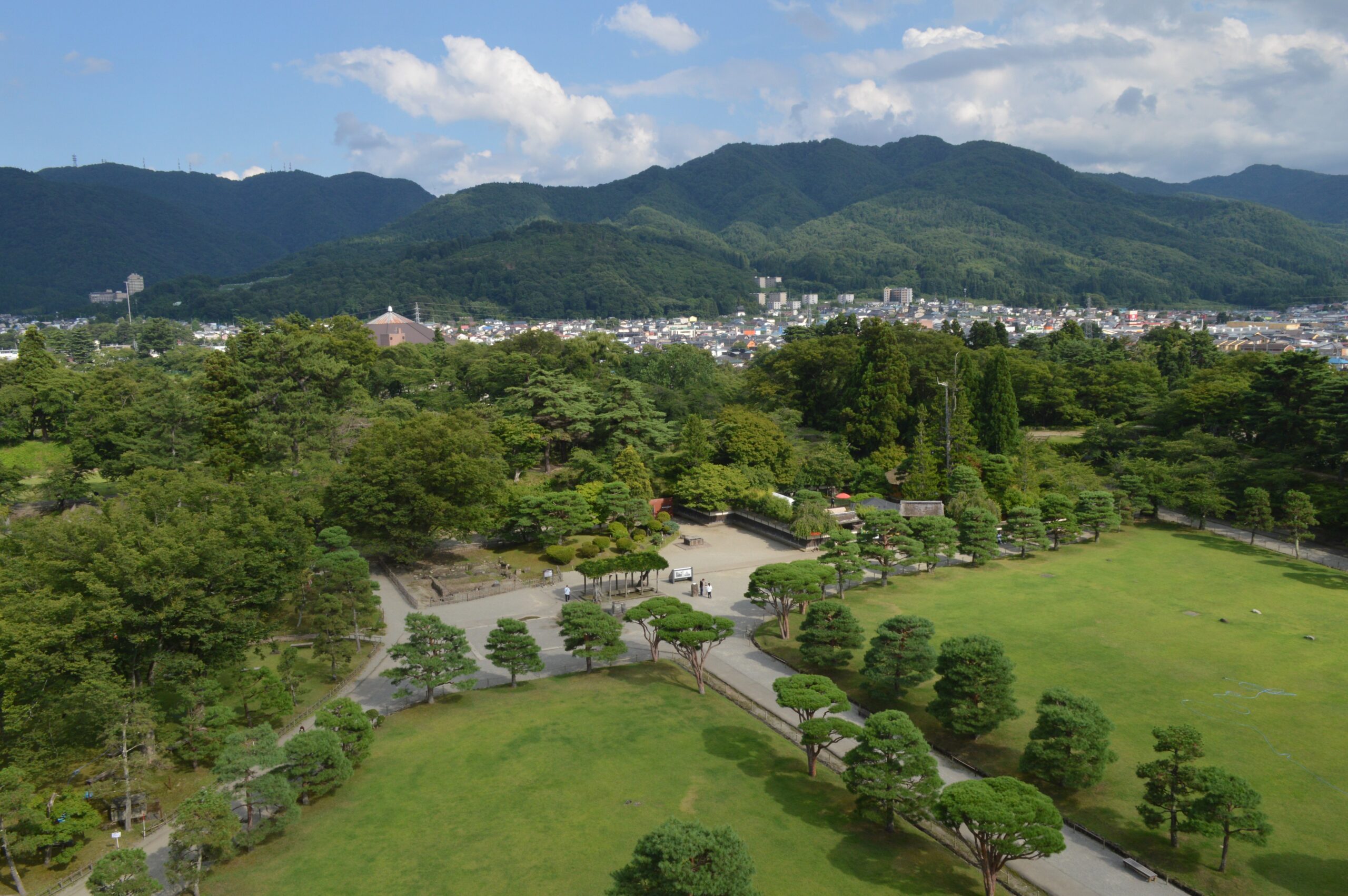
The July 2022 image looks out across green grounds toward the city and surrounding hills. It illustrates the relationship between the castle site and its setting, rather than a current blossom forecast or the view from every visitor route. Pause with the operator's grounds map and orient yourself before moving to the next stop. Read labels where available instead of guessing a structure's purpose from its appearance.
Give exterior exploration its own time. It is easy to buy museum admission, rush the interior and then discover that the feature you wanted to see was outside. Reverse that problem by marking your priorities first. If weather or access makes part of the grounds unsuitable, keep the visit selective. Do not climb walls or cross barriers to recreate a photograph taken from a different position.
Work backward from the last admission, not closing time
The official museum information lists 8:30 a.m.–5 p.m., with last entry at 4:30 p.m., as checked on October 19, 2026. Those are different deadlines. Arriving near last entry leaves much less time for reading than arriving earlier. Recheck current notices before traveling and avoid treating a late ticket purchase as a guarantee of an unhurried visit.
Include your onward journey when planning the finish. Locate the stop or parking place you will actually use, check the relevant departure or access arrangements and leave time to reach it. If someone in the party needs to avoid stairs or lengthy walking, ask the museum about the exact visitor route before paying. Neither a modern reconstruction nor a wide exterior photograph establishes a step-free interior experience.
Make one Aizu extension earn its place
After the castle, choose a complementary stop rather than adding everything that appears on a regional list. Someone interested in tea culture can examine the Rinkaku arrangements; someone with a tight onward connection may prefer a meal and a straightforward return. Decide what you would be disappointed to miss, then protect that choice before filling the remaining space.
Before buying, confirm the actual admission product, any separate tea charge, the museum's current opening notices and the next journey. Keep historical travel writing separate from operational information. A focused castle visit can include both the outside setting and a worthwhile look inside, while a shorter visit can still be intentional. The poor-value option is paying for multiple inclusions and leaving too little time to use the one that mattered most.
Research-based guide prepared by JAPANOVA. Traveler accounts are individual self-reports; comparisons are editorial analysis.
Facility and shop information
- Tsuruga Castle official operator — checked 2026-10-19
- Tsuruga Castle official interpretation — checked 2026-10-19