If you have one meal in Morioka, you do not need to turn its three famous noodle dishes into an eating challenge. Reimen, jajamen and wanko soba offer different temperatures, textures and forms of participation. Choose the meal you want and the time you can comfortably give it. A good decision leaves you satisfied and able to enjoy the rest of the visit.
- Choose reimen for a cold bowl and deliberate seasoning
- Choose jajamen when mixing the flavor is part of the appeal
- Choose wanko soba for hosted dining rather than a score
- Two firsthand accounts favor different ways to fit a meal
- Use food photographs without confusing restaurants
- Build the budget around one complete order
- Facility and shop information
Choose reimen for a cold bowl and deliberate seasoning
Pyonpyonsya describes its Morioka reimen through firm, chewy noodles, broth made with beef and beef bones plus chicken, and dedicated kimchi. Its current guide encourages adjusting the kimchi to taste. That makes the dish worth considering when a cold bowl and springy texture appeal, while keeping control of seasoning more useful than chasing a particular heat description.
Ask how the chosen restaurant serves the kimchi and which adjustments are possible. A cold presentation does not make the broth meat-free. Pyonpyonsya's allergy information lists wheat and egg for its standard Morioka reimen and other relevant ingredients. If ingredients matter to you, consult the current information for the actual dish and restaurant; the regional name alone cannot establish suitability.
Choose jajamen when mixing the flavor is part of the appeal
Jajamen brings noodles and a miso topping together for mixing rather than serving them as a cold broth dish. Pairon's own guide describes adding condiments gradually, mixing the noodles and miso, then asking for chi-tan-tan near the end. Hirari's actual visit to Pairon describes adding vinegar partway through and asking for the egg-soup finish, chi-tan-tan. Treat that as a description of a particular visit, and ask staff how to handle your own order, including any extra charge and ingredients.
The important choice is whether you enjoy adjusting a bowl as you eat. Begin by tasting the combination offered, then add condiments gradually rather than emptying every container into it at once. If you want the soup finish, ask early enough to understand the process. An unfamiliar flavor is easier to assess when you have not simultaneously changed every component.
Choose wanko soba for hosted dining rather than a score
Azumaya's current page describes wanko soba as an attendant-served, replenished small-bowl meal and lists JPY4,500 including tax, with prices dated from December 1, 2025. It explicitly says that rushing is not a rule and encourages eating at your own pace. That is a better starting point than treating photographs of large bowl stacks as an obligation.
Current reservation and same-day arrangements need checking separately. The operator's homepage carries dated availability notices, and some weekday seats can be reserved under its published conditions. Do not assume that arriving hungry guarantees an immediate table. Tell staff when you want to stop, follow their instructions and avoid eating past comfort to reach a number remembered from television.
Two firsthand accounts favor different ways to fit a meal
Tabizukigirl's June 2023 travel account describes spreading the three noodles across a roughly fifty-hour visit. A queue changed the first reimen choice, and a limited-bowl wanko option at another shop suited the writer's appetite. That historical option is not confirmed as today's menu. The account shows the usefulness of flexibility, rather than proving all three belong in one sitting.
Hirari, who previously lived in Morioka and revisited with family, describes differing reactions to jajamen among companions and children finding a medium portion too much. Repeated visits improved the writer's own appreciation. Both accounts support matching the meal to the diner; they differ between completing a trip's food interests and learning to enjoy one flavor. Neither creates a representative popularity ranking.
Use food photographs without confusing restaurants
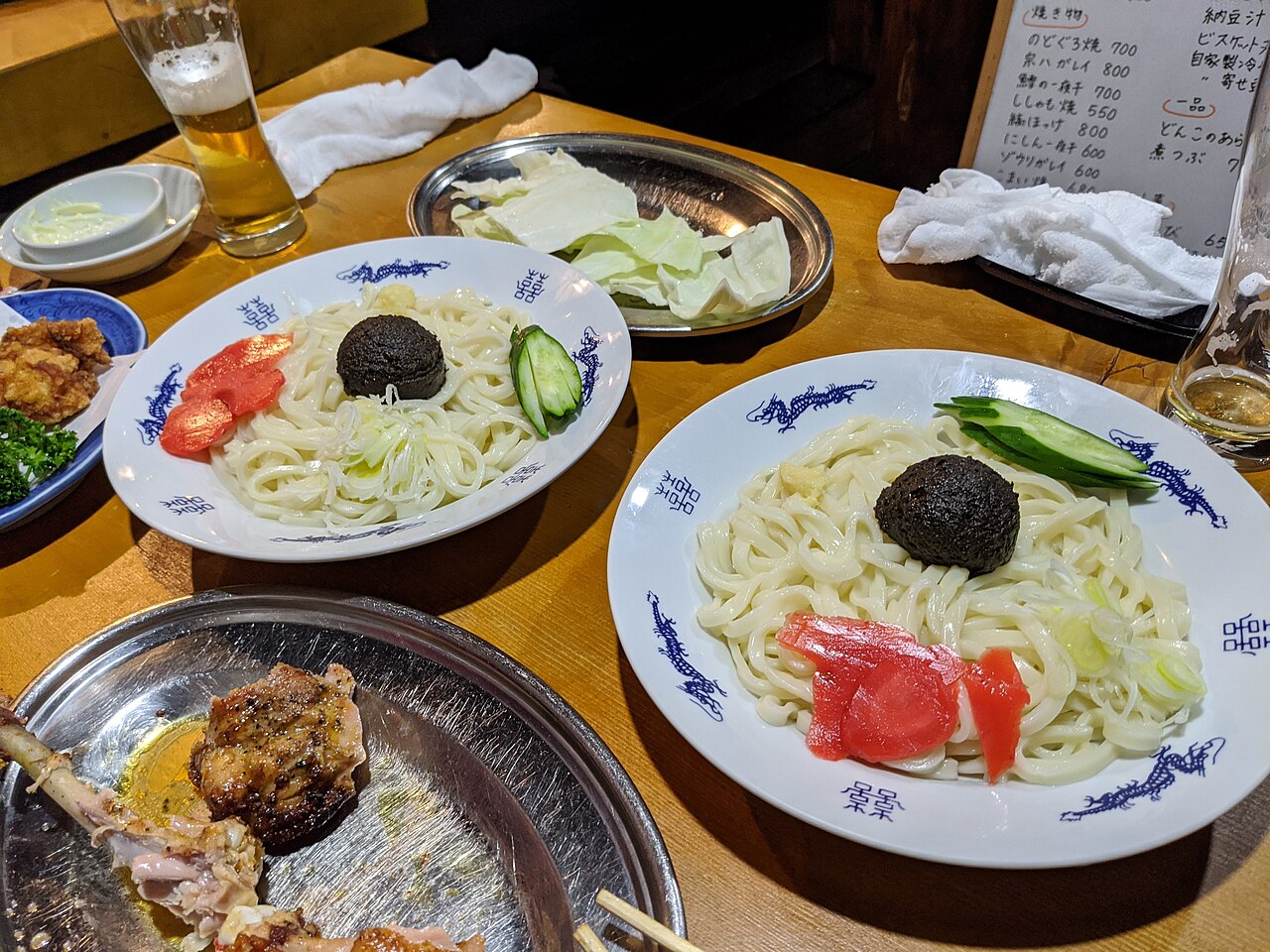
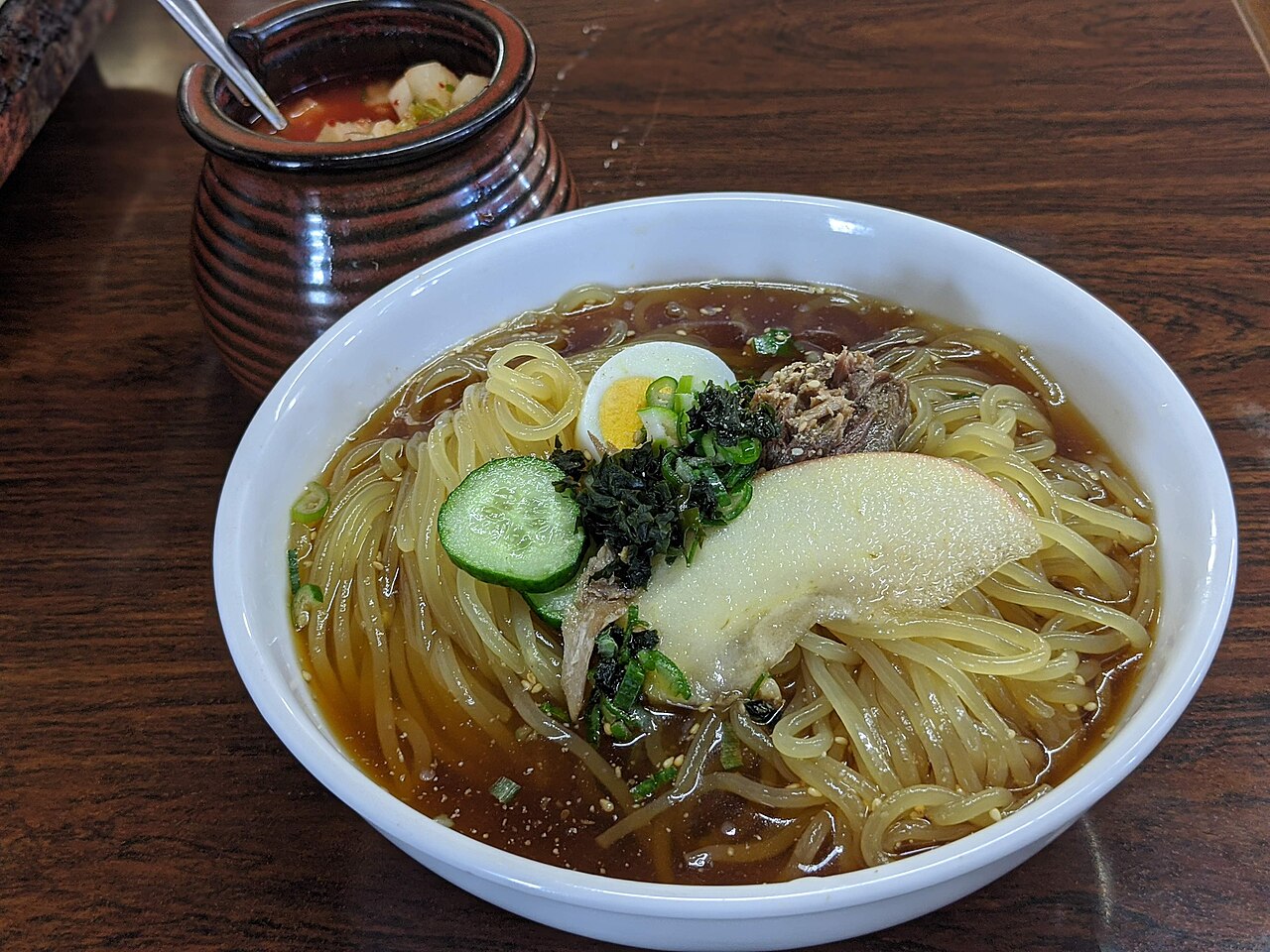
The main photograph shows reimen at Morishige in November 2019, including a separate kimchi pot. It does not show Pyonpyonsya's current menu. The second shows unmixed jajamen in February 2020, with other dishes on the table. The photographs help explain how differently the noodles can arrive; they do not establish today's portion, price or ingredients at the shops discussed.
Decide whether your priority is a particular restaurant or the type of meal. For a short connection, protect the time needed to return to the station and keep an alternative whose current menu you understand. A queue that looks short is still not a reliable service-time estimate. Do not promise yourself a full hosted meal inside a narrow gap between trains.
Build the budget around one complete order
For reimen and jajamen, check whether the quoted item is a single bowl, a set or a larger meal with meat or sides. For wanko soba, confirm the actual course and how your group will be seated if some choose ordinary dishes. Azumaya currently says mixed ordinary-menu and wanko orders can sit together, but that should not be assumed at every operator.
Choose reimen for the cold, chewy bowl you want; jajamen for a mixed flavor you can adjust; or wanko soba when the hosted format is itself the attraction. Read the present menu and availability before traveling across town. Leaving another dish for a future meal is a sensible outcome, not a failed Morioka visit.
Research-based guide prepared by JAPANOVA. Traveler accounts are individual self-reports; comparisons are editorial analysis.
Facility and shop information
- Pyonpyonsya restaurant — checked 2026-10-19
- Pyonpyonsya allergen list — checked 2026-10-19
- Azumaya soba restaurant — checked 2026-10-19
- Pairon jajamen restaurant — checked 2026-10-19