At Izumo Taisha, the useful decision is how much of the day to protect for the shrine before adding somewhere else. A coastal extension and a journey toward Matsue pull the afternoon in different directions. Begin with an unhurried worship visit, understand the shrine's particular etiquette, and choose one extension only after checking the transport home. This guide treats the shrine as a living place of worship rather than a backdrop to a checklist.
- Start with the shrine, not the giant-rope photograph
- Use Izumo Taisha’s own worship instructions
- Choose between a coastal afternoon and Matsue
- Two completed trips show different priorities
- Allow for the approach as part of the visit
- Keep one clear priority and a workable return
- Facility and shop information
Start with the shrine, not the giant-rope photograph
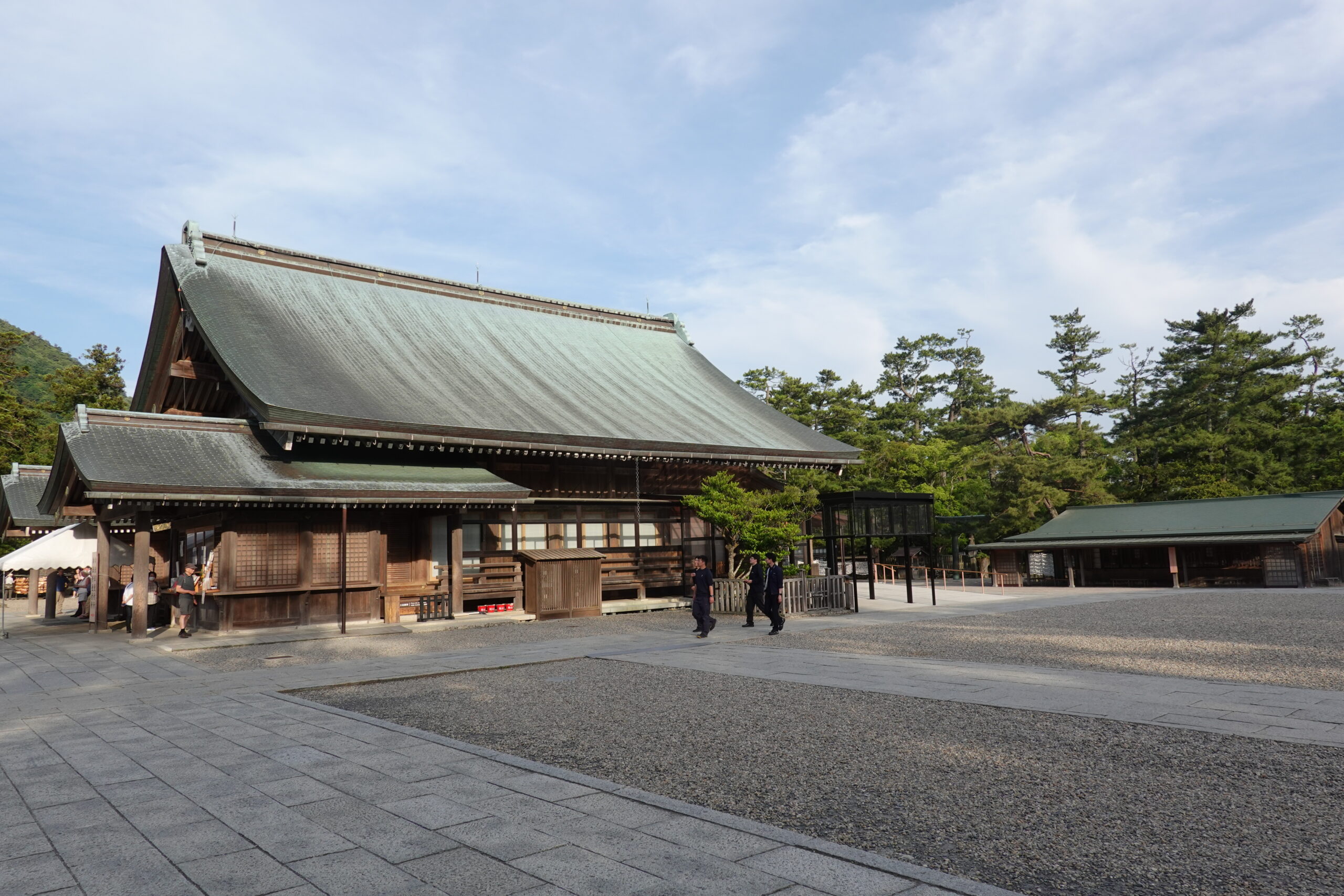
Izumo Taisha's own grounds guide distinguishes the main sanctuary, worship hall and Kaguraden. They are different buildings, so a photograph of one should not become directions to another. The main image here shows the worship hall in May 2024. It does not show the Kaguraden's famous large rope, nor does it establish that every area behind a gate is open to visitors.
Use the official grounds map on arrival and follow the indicated public route. Decide whether your priority is worship, architecture or a slower walk through the precincts. Moving directly between photographed landmarks can obscure how the grounds fit together. If a section is restricted or a ceremony changes circulation, follow the shrine's signs and staff rather than trying to reproduce another traveler's exact path.
Use Izumo Taisha’s own worship instructions
The shrine's FAQ gives its usual worship sequence as two bows, four claps and one final bow. That differs from the two-clap pattern many visitors first encounter elsewhere. Read the local instructions before approaching the worship space, and give people already praying enough room. There is no need to perform a sequence for the camera or delay the next worshipper while checking a phone.
A respectful visit does not require believing a promise about romance, luck or an immediate personal outcome. If you want to buy an amulet or another shrine item, check the explanation and price at the appropriate counter. Treat the purchase as a voluntary part of your visit, not a compulsory fee to make the day meaningful. Photography and access permissions should come from signs for the particular space.
Choose between a coastal afternoon and Matsue
Draw the next leg before committing to it. A coast-focused afternoon means checking the journey toward Inasa Beach and, if you want to go farther, Hinomisaki. A Matsue extension means organizing a different onward journey. Do not assume the two are interchangeable additions simply because both appear in regional itineraries. The final connection can matter more than the distance on a map.
For a coast extension, check the return bus first and decide whether you would still enjoy the stop without waiting for sunset. For Matsue, identify the specific attraction you want and its final admission before leaving Izumo. If either plan would make the shrine visit rushed, keep the afternoon local. A satisfying day can consist of the shrine, a meal and one nearby walk rather than a cross-region collection.
Two completed trips show different priorities
WhippuChan's March 2026 Shimane report describes visiting the shrine after soba, walking to Inasa Beach and continuing by bus toward Hinomisaki. The last bus constrained the coastal evening before sunset. A separate April 2023 report by astrolia records Izumo Taisha and Matsue Castle on the same day's itinerary. That second account documents a pairing; it does not provide a detailed appraisal of worship at the shrine.
The shared lesson is limited but useful: the shrine can anchor a wider day, while the extension changes what must be timed. The accounts diverge toward coast and city heritage. JAPANOVA's recommendation is to choose the direction that interests you and check its actual transport, rather than borrowing the most ambitious parts of both historical trips. Neither account supplies today's bus schedule or proves a standard visit length.
Allow for the approach as part of the visit
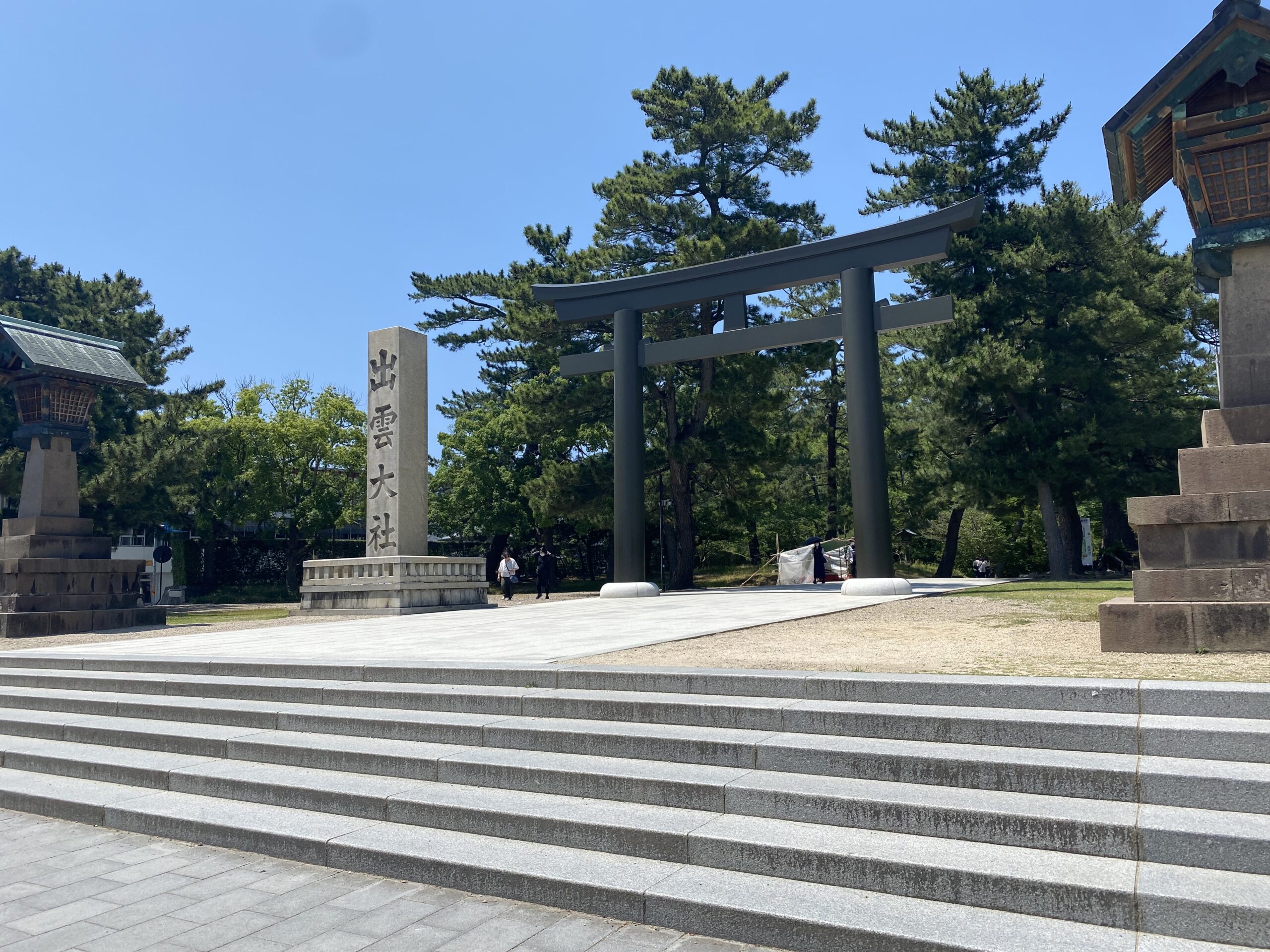
The entrance photograph shows a torii and the approach from the street in June 2024. It is contextual architecture, not a promise of a step-free route through every part of the grounds. If stairs, slopes or walking distance affect your party, use the current map and ask the shrine about the route you intend to take. A wide photograph cannot answer those questions for you.
Leave a practical gap for a meal and for getting back to your chosen station or stop. Soba may be a natural local meal choice, but restaurant opening days and queues are separate from shrine access. Avoid making the entire visit depend on one unreserved restaurant. If you are traveling with luggage, settle its storage before turning the worship visit into an extended coastal walk.
Keep one clear priority and a workable return
Before the day, save the shrine's grounds map and worship FAQ. Then write down your main priority, one optional extension and the last connection you are comfortable taking. Recheck those details on the travel date, especially if a bus is the only practical return from a coastal stop. Treat an old travel diary's successful connection as an example, not a timetable.
Choose a shrine-centered visit if you value time to observe the buildings and worship without hurrying. Add the coast when its scenery is the reason you came and the return works. Choose Matsue when a specific city attraction matters more than sunset. Making that decision early helps you spend on transport or a meal that serves your own day, instead of paying for extra movement that leaves the main visit squeezed.
Research-based guide prepared by JAPANOVA. Traveler accounts are individual self-reports; comparisons are editorial analysis.
Facility and shop information
- Izumo Taisha grounds guide — checked 2026-10-19
- Izumo Taisha worship FAQ — checked 2026-10-19