For katsuo no tataki in Kochi, decide how you want to eat before deciding how many dishes to order. Hirome Market offers the freedom of a shared food hall; a separate restaurant offers a different way to secure seats and settle into a meal. Myojinmaru operates in both settings, making this a practical comparison of meal formats rather than a claim that one location always tastes better.
- Choose shared-table variety or a reserved place to sit
- Make the first order smaller than the whole wish list
- Two visits show why later is not automatically easier
- Treat kitchen hours as a branch-specific detail
- Use the photographs to understand the dish, not to order from history
- Spend on the meal format your group will enjoy
- Facility and shop information
Choose shared-table variety or a reserved place to sit
Myojinmaru's official Hirome Market page explicitly says seats cannot be reserved because the branch is in a food court. Buying food there does not buy a private table or remove the need to find an appropriate place to eat. If your party cannot comfortably wait, carry trays or split briefly while ordering, take that constraint seriously before joining a food queue.
The separate Obiyamachi branch has table seating and accepts reservations, according to its own page. Its location in the shopping arcade is close to the market, but it is a distinct restaurant with its own hours and menu. A reservation can make sense for a group that values sitting together more than choosing dishes from several independent market stalls.
Make the first order smaller than the whole wish list
Begin with the food you came for, then decide whether the meal needs rice, a side dish or a second preparation. If the current menu offers salt and sauce versions, ask about the combination that interests you rather than ordering two full meals by default. Look at the stated number of pieces and inclusions, because a plate and a set meal solve different appetites.
In the market, agreeing on a total spending limit before separating to order helps prevent duplicate purchases. One person may assume that rice is already coming while another buys an additional set. Tell your companions what you are actually ordering and where you will meet. If traveling alone, ask staff about the seating situation before buying more food than you can conveniently carry.
Two visits show why later is not automatically easier
In ぱたちゃん's account of a May 2023 trip with her mother, the market was full at lunchtime. They divided the tasks of finding seats and ordering; the Myojinmaru queue took around thirty minutes. They enjoyed substantial tataki meals but were too full for the multi-stall tasting they had initially imagined.
A separate diary published in August 2024 describes finding the market full after 21:00 on a July Saturday. The writer instead found a place at Myojinmaru's Obiyamachi restaurant and enjoyed a late selection including bonito belly and other dishes. Both visits make seating and appetite relevant. They differ in the solution: coordinating a market meal versus changing to a seated restaurant. These are individual outcomes, not predicted queue lengths, and the second account is not a review of tataki itself. It does not establish that arriving late secures either a market seat or a restaurant table.
Treat kitchen hours as a branch-specific detail
The market building and an individual food stall do not necessarily share the same hours. At the time of checking on October 19, 2026, Myojinmaru's branch page lists different Sunday hours from the Monday–Saturday pattern. The market also publishes dated closures and tenant changes. Check both sources when the visit depends on one particular dish.
The Obiyamachi restaurant lists a lunch session and a separate evening session. Do not arrive between them assuming the shared brand means continuous service. Confirm the meal session when reserving, along with the last order and cancellation conditions. A historical visitor's successful late entry is a useful reminder to ask, not an invitation to rely on an unreserved table near closing.
Use the photographs to understand the dish, not to order from history
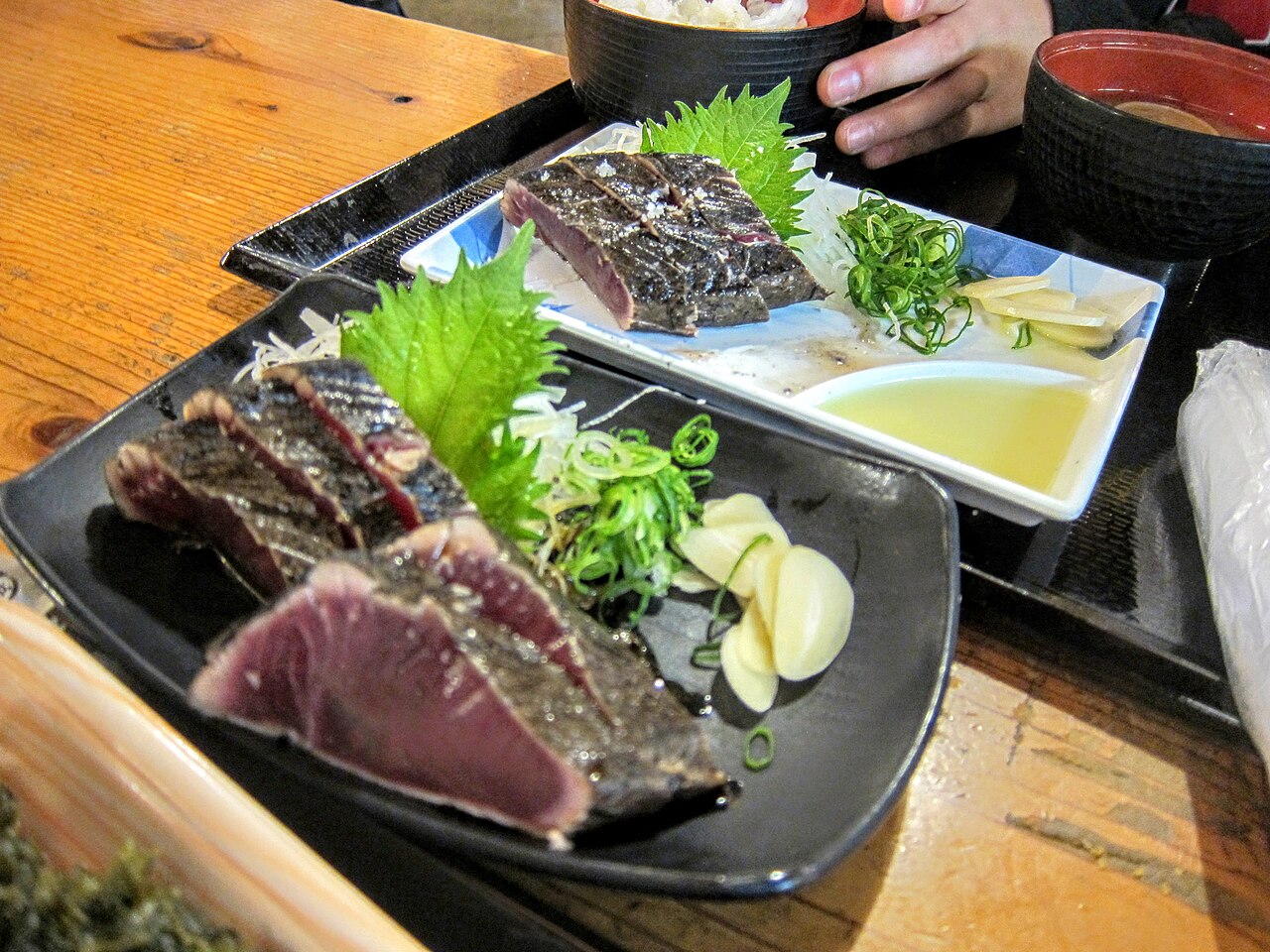
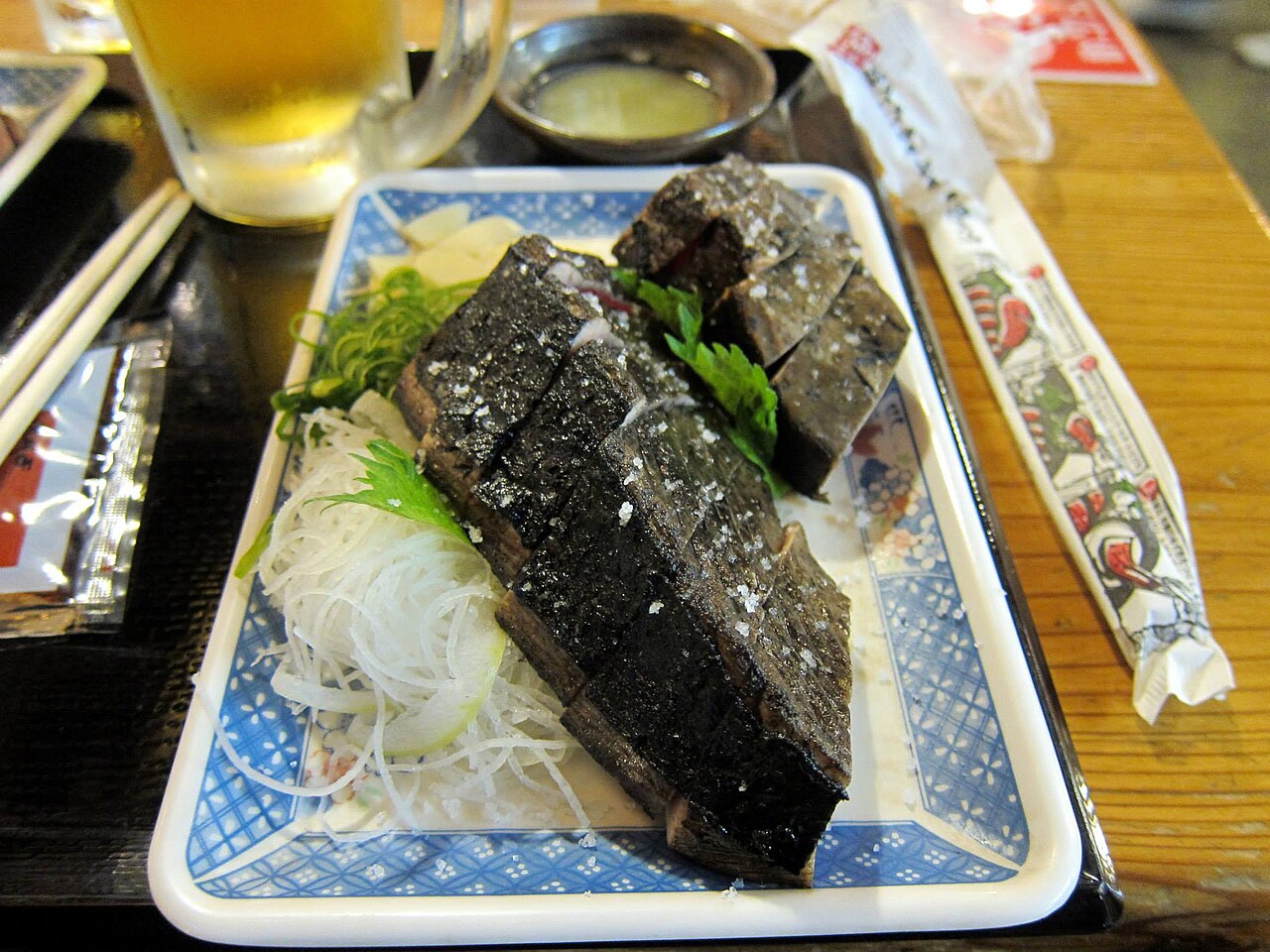
Both photographs show actual tataki plates at Hirome Market in March 2014. One is identified by its photographer as salt-style; the other shows garlic and green onion alongside the sliced fish. They show contrasting accompaniments, but neither is a current menu, price or portion promise, and neither identifies the particular vendor as Myojinmaru.
Ask about ingredients and preparation if they affect your choice. A visually simple plate can include sauces or accompaniments you need to check. Tell the restaurant what you can eat rather than attempting to remove a visible ingredient and assuming that resolves the requirement. If one traveler does not want tataki, compare the current alternatives before committing the whole party to the same order.
Spend on the meal format your group will enjoy
Choose the market when the shared atmosphere and ability to combine stalls are part of the attraction, and your party can manage the seating and ordering. Choose a separate restaurant when a confirmed table, conversation or a broader meal matters more. Neither setting guarantees a better value bill; the total depends on the dishes, drinks and extras you actually select.
Before going, save the exact branch page, check the relevant day's closures and choose a fallback that does not require repeating the same seating problem. Keep enough appetite for the dish you care about rather than ordering everything at once. A satisfying Kochi meal should leave you remembering what you ate, with the practical arrangements supporting the experience rather than consuming it.
Research-based guide prepared by JAPANOVA. Traveler accounts are individual self-reports; comparisons are editorial analysis.
Facility and shop information
- Myojinmaru Hirome Market branch — checked 2026-10-19
- Myojinmaru Obiyamachi branch — checked 2026-10-19