A gold-colored souvenir and a gold-leaf workshop solve different travel needs. One gives you a finished object selected for its appearance and use; the other gives you time with a delicate material and a piece you helped decorate. In Kanazawa, decide which experience matters before choosing a shop merely because it lies along your sightseeing route. The most satisfying purchase may be the one you can explain and use after returning home.
Choose a finished object or time at the worktable
Start with a simple question: do you want a gift for someone else, or an activity for yourself? Buying a completed craft lets you compare finish, dimensions and suitability for its recipient. A workshop is better suited to someone who enjoys making decisions about patterns and working patiently with guidance. It is not automatically a cheaper substitute for buying a professionally finished object.
For a gift, think about the recipient's home rather than only the display shelf. A compact box might suit someone who keeps small belongings together; tableware needs to fit how they actually serve food. Hakuichi's craft range includes both daily-use items and decorative pieces. Ask about the specific product's materials and care rather than assuming everything with a similar sheen has the same construction or purpose.
Match the workshop to the right location
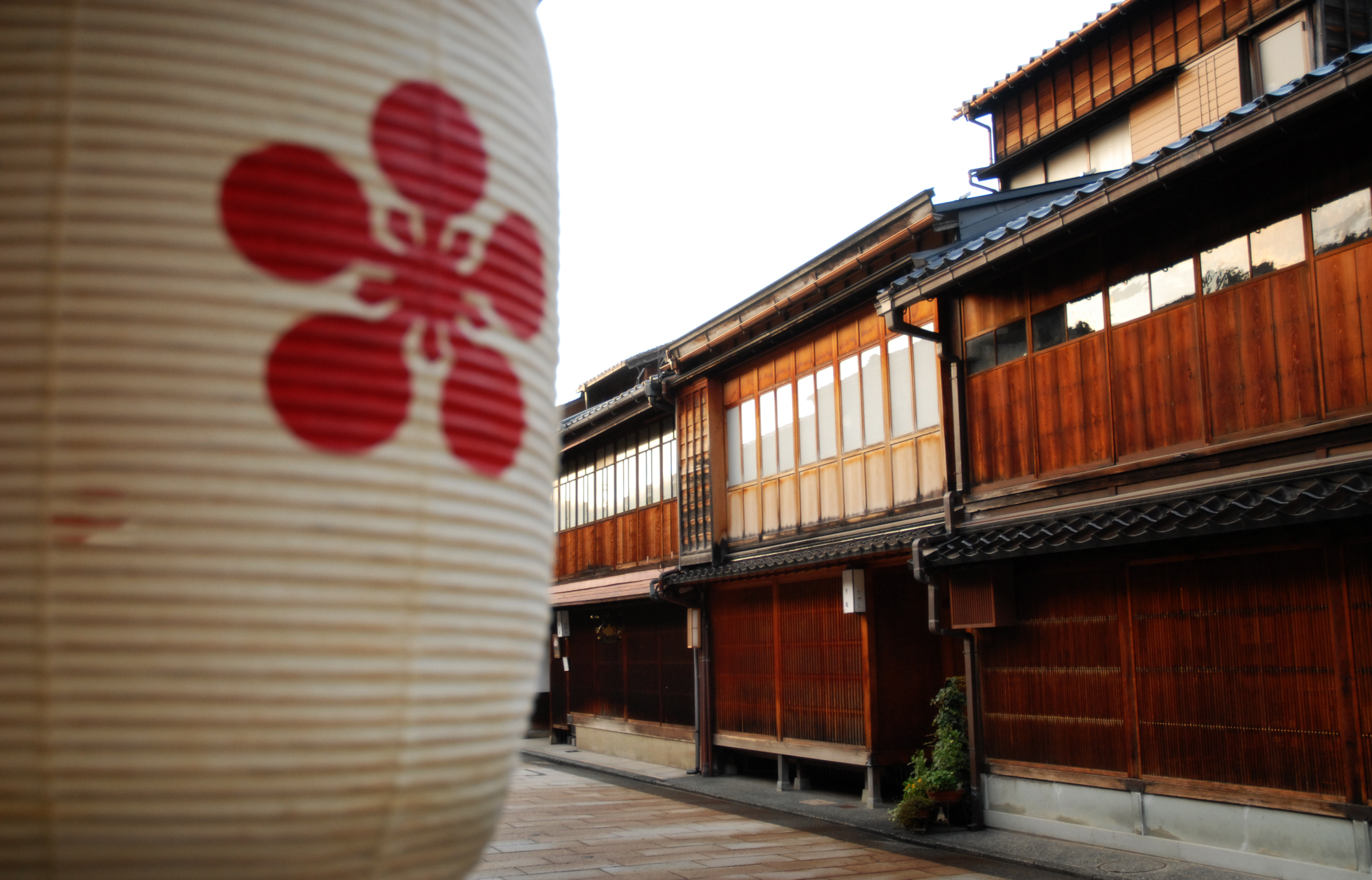
Hakuichi's English experience page distinguishes its main Hakukokan store from Kanazawa Bikazari Asano in Higashi Chaya. It offers different levels of metal-leaf decoration, while the more open-ended Wizard Course is listed at the main store only. A photograph of the historic tea district therefore does not establish where your chosen class will happen.
Confirm the branch, item, design method, language arrangements and full time commitment when reserving. Ask whether the quoted duration includes preparation, finishing and packing. The provider also describes a separate leaf-transfer activity using specialist tools. That is a different task from decorating a plate or box, so do not book by the phrase gold leaf alone. Save the actual address with your confirmation.
What two participants found rewarding
Melinda, writing in November 2025 about a winter 2024 visit, described choosing Hakuichi's Wizard Course with her partner. They designed a plate and box, experimented with gold and silver leaf, and particularly liked that the results reflected their own tastes. Dorsaf Gatri's separate first-person magazine account describes initial nervousness about delicate handiwork, followed by growing confidence with the craftswoman's guidance.
Both valued participation, but their starting points differed: one approached the session as a creative project, while the other needed reassurance before enjoying the process. These are individual accounts, not a guarantee of a particular instructor, language or result. JAPANOVA's inference is to choose the degree of creative freedom you want and ask how much guidance the current class supplies. Previous craft experience need not be the only deciding factor.
Read the object before reading the price
For a finished purchase, ask what the base object is made from, what kind of leaf or decorative finish is used, and who made or finished it. A product bought in Kanazawa is not, by that fact alone, entirely manufactured there. If local production matters to you, request a clear explanation of which work happened locally. Keep any maker information supplied with the object.
For tableware, ask whether the item is intended for food, how it should be washed, and whether heat or particular appliances are unsuitable. Avoid inferring practical use from a photograph or from the fact that another item in the shop is a serving dish. If staff cannot confirm an important requirement, choose something whose intended use is clear or buy a decorative piece deliberately.
Compare the final total for the particular object you want. A small item plus protective packaging can make more sense than a larger object that creates luggage problems. Set a maximum before browsing, then leave yourself permission to buy nothing if the available pieces do not fit. The workshop fee and additional retail purchases should be separate decisions, even when they occur in the same building.
Keep your souvenir budget separate from snacks
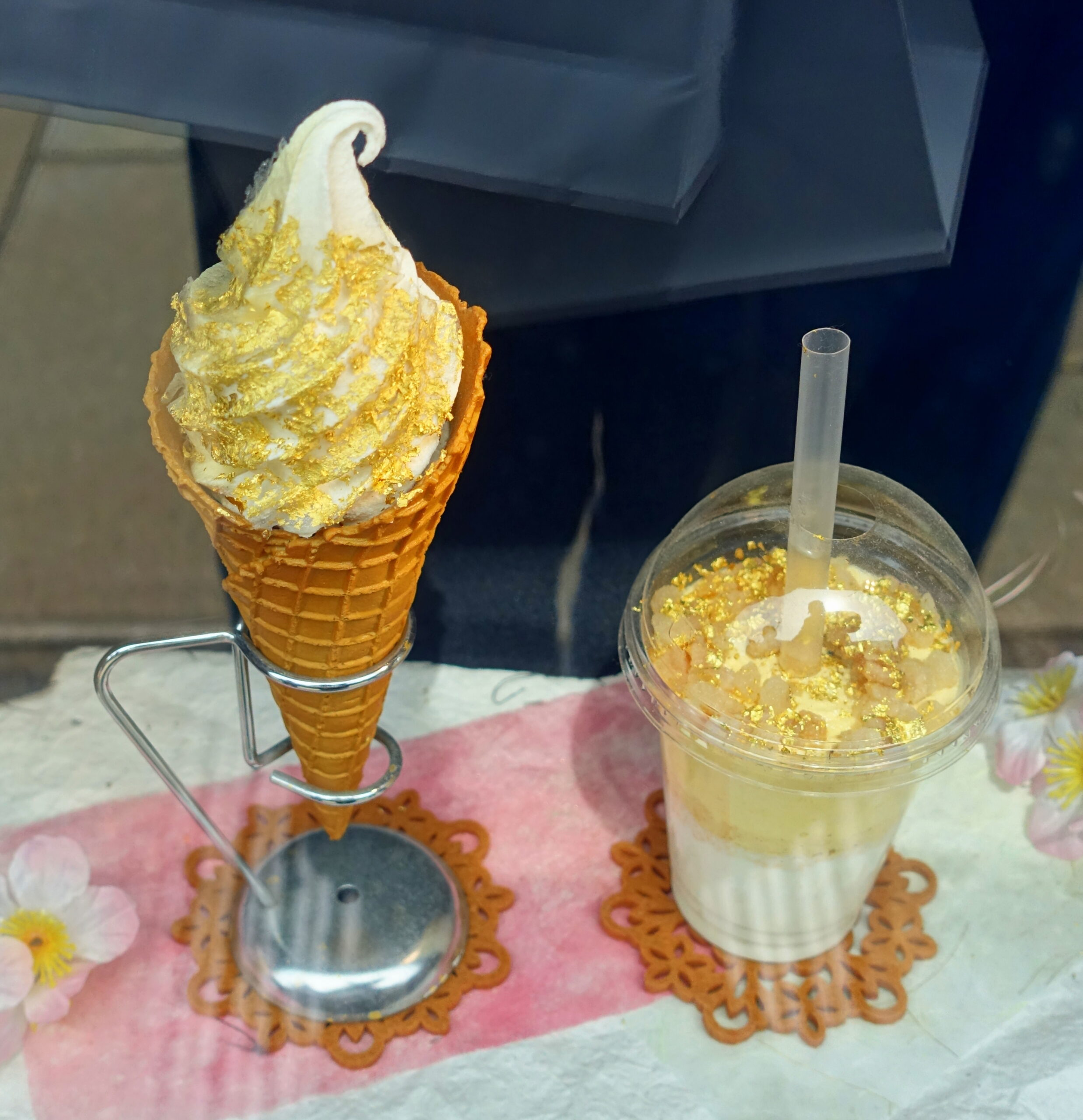
Gold leaf also appears in Kanazawa food products, including the familiar decorated soft-serve ice cream. A snack can be an enjoyable short stop, but it does not replace a craft demonstration, a hands-on class or an explanation of a finished object's construction. The photograph here shows that different use of the material; it is not a picture of an included workshop item.
If your priority is a lasting souvenir, decide on that budget first and consider refreshments afterward. Conversely, a traveler who wants to browse the district without buying a fragile object need not turn a snack stop into a shopping obligation. Plan around your own purpose instead of trying to collect every gold-themed experience in one afternoon.
Leave with care instructions and a realistic schedule
Allow space after a class for the finishing and packing arrangements the provider specifies. Ask before booking if you need to leave for a train at a fixed time. For a finished purchase, retain the receipt, maker or product description and care guidance together. Ask about protective packing and any shipping option before assuming the object can simply sit at the bottom of a bag.
A useful Kanazawa craft outing ends with three things settled: you chose participation or a finished purchase intentionally, you understand what you are taking home, and you can care for it. That creates a stronger connection to the craft than buying the shiniest object while hurrying between attractions.
Research-based guide prepared by JAPANOVA. Traveler accounts are individual self-reports; comparisons are editorial analysis.