Kappabashi is a useful Tokyo shopping outing when you have a kitchen task to solve: a knife that fits your cooking, comfortable chopsticks or a small tool you will actually use. It can also become an expensive collection of objects that looked convincing in a specialist shop. Start with the job, compare a few candidates and decide how each purchase will get home before paying.
- Make a short list of jobs rather than a list of famous stores
- Choose a shopping day with individual openings in mind
- Use demonstrations to test a choice rather than to borrow expertise
- Ask the questions that will still matter at home
- Arrange the journey home before buying a bulky or sharp item
- Finish with one useful decision and time for the rest of Tokyo
Make a short list of jobs rather than a list of famous stores
Write down the cooking task you want to improve and the size limits of your luggage or kitchen. A small useful tool can be a more satisfying purchase than a visually impressive item you rarely use. Set a budget before entering specialist stores and decide whether it is for one main purchase or several smaller things. That prevents the first attractive display from defining the whole outing.
The shopping association's directory and map help you identify relevant stores. Use them to build a compact route instead of trying every doorway. If a particular shop matters, confirm its own opening arrangements. A street can be accessible while a specialist you wanted is closed. Leave time to return to one candidate after comparison rather than buying everything during the first pass.
Choose a shopping day with individual openings in mind
The association's FAQ says individual customers are welcome at almost all stores. You do not need to be buying equipment for a restaurant to investigate the district. The same FAQ distinguishes the street from individual shop holidays: most stores open Saturdays, while it estimates around thirty percent open Sundays. Those broad statements are useful orientation, not a guarantee for the shop on your list.
A February 23, 2026 diary by Ruu describes arriving on a public holiday and finding many shops closed. The writer still bought a knife after a cutting demonstration, but missed some of the wider browsing they had wanted. Treat that as one day's experience. Check your intended shops directly before building a holiday or weekend outing around them, especially if you have only one opportunity to visit.
Use demonstrations to test a choice rather than to borrow expertise
In a separate December 2024 account, Katsube describes comparing stores, receiving explanations and trying a knife before buying a larger knife and a petty knife. The same outing included chopsticks: the writer and spouse chose different pairs according to feel and later noticed the difference in use. Ruu's account also values trying the blade, but describes a more spontaneous purchase after entering a shop.
Both accounts support asking for a practical explanation when considering a tool. They differ in the amount of comparison and the range of goods bought. Neither proves a universal best brand or establishes current prices. Our recommendation is to describe how you cook, request a demonstration only where staff offer it, and compare grip, size and required care before deciding whether the purchase meets your own needs.
Ask the questions that will still matter at home
For a knife, ask about the material, maintenance, sharpening and suitability for the food and board you use. Explain whether you want something for daily household cooking or a specialized task. Do not assume the most decorative blade is the easiest one for your routine. If you cannot understand the care instructions, ask for a written explanation you can keep rather than agreeing merely to avoid a difficult conversation.
For chopsticks or other small tools, compare dimensions and how they feel where handling is allowed. Ask about cleaning requirements and any restrictions relevant to your intended use. Keep the item's name and shop details with the receipt. That makes it easier to identify what you bought and to ask a specific follow-up question after the trip, rather than trying to recognize it from a shopping photograph.
Arrange the journey home before buying a bulky or sharp item
Ask the retailer what protective packaging is supplied and consider whether it fits your actual luggage. For a sharp tool, confirm your airline's current packing and baggage rules before committing to a purchase; check the rules relevant to the countries and journey you will actually take as well. Do not treat a store's ability to sell an object as proof that every route home accepts it in the same way.
If considering shipment, ask whether the store offers the service to your destination and establish the complete cost and conditions. Avoid buying first and assuming delivery can be arranged afterwards. A large tray, fragile bowl or heavy pan has a transport cost even if it is sold at an attractive price. Compare the purchase as it will arrive home, not simply as it sits on the shelf.
Finish with one useful decision and time for the rest of Tokyo
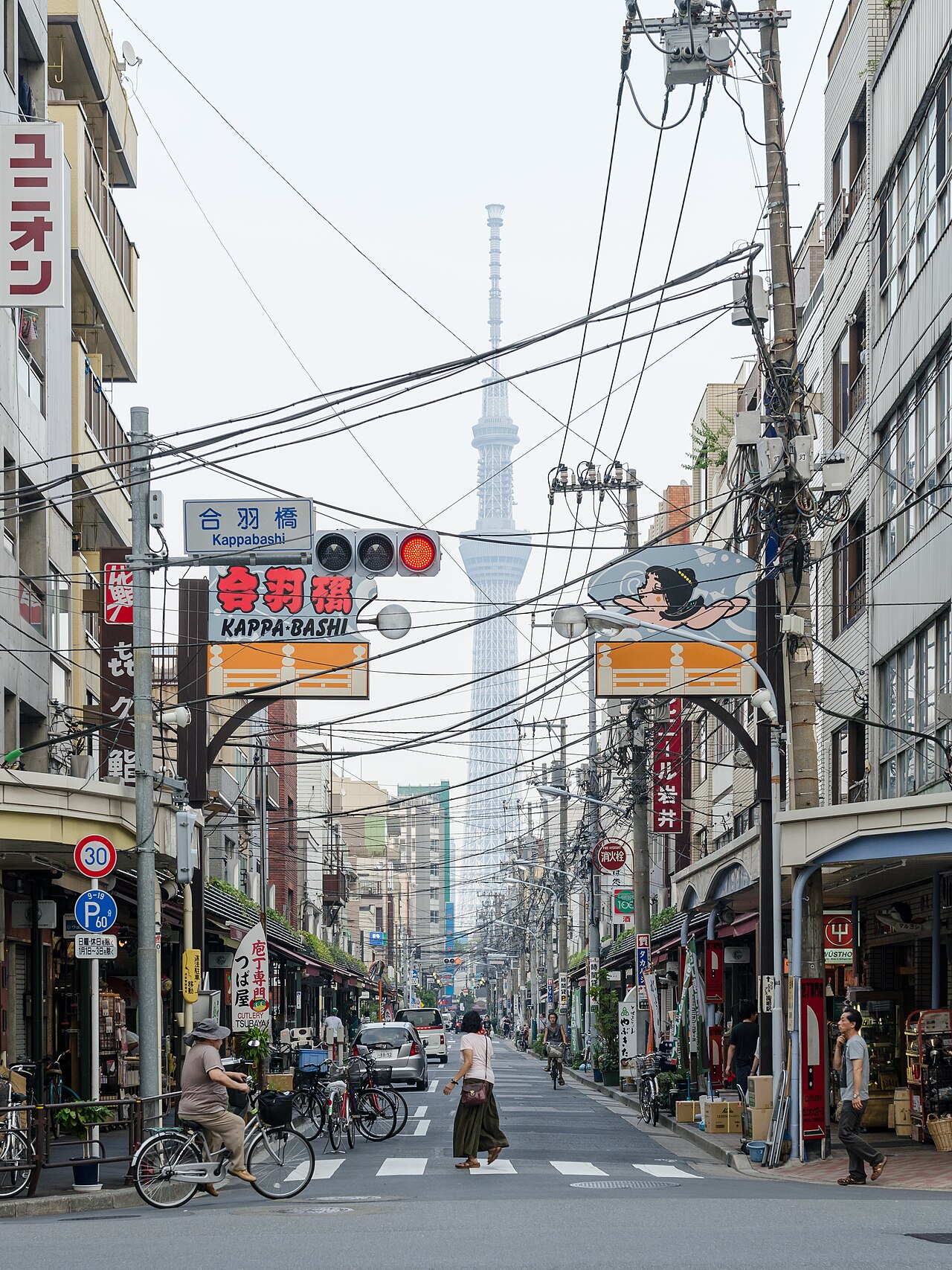
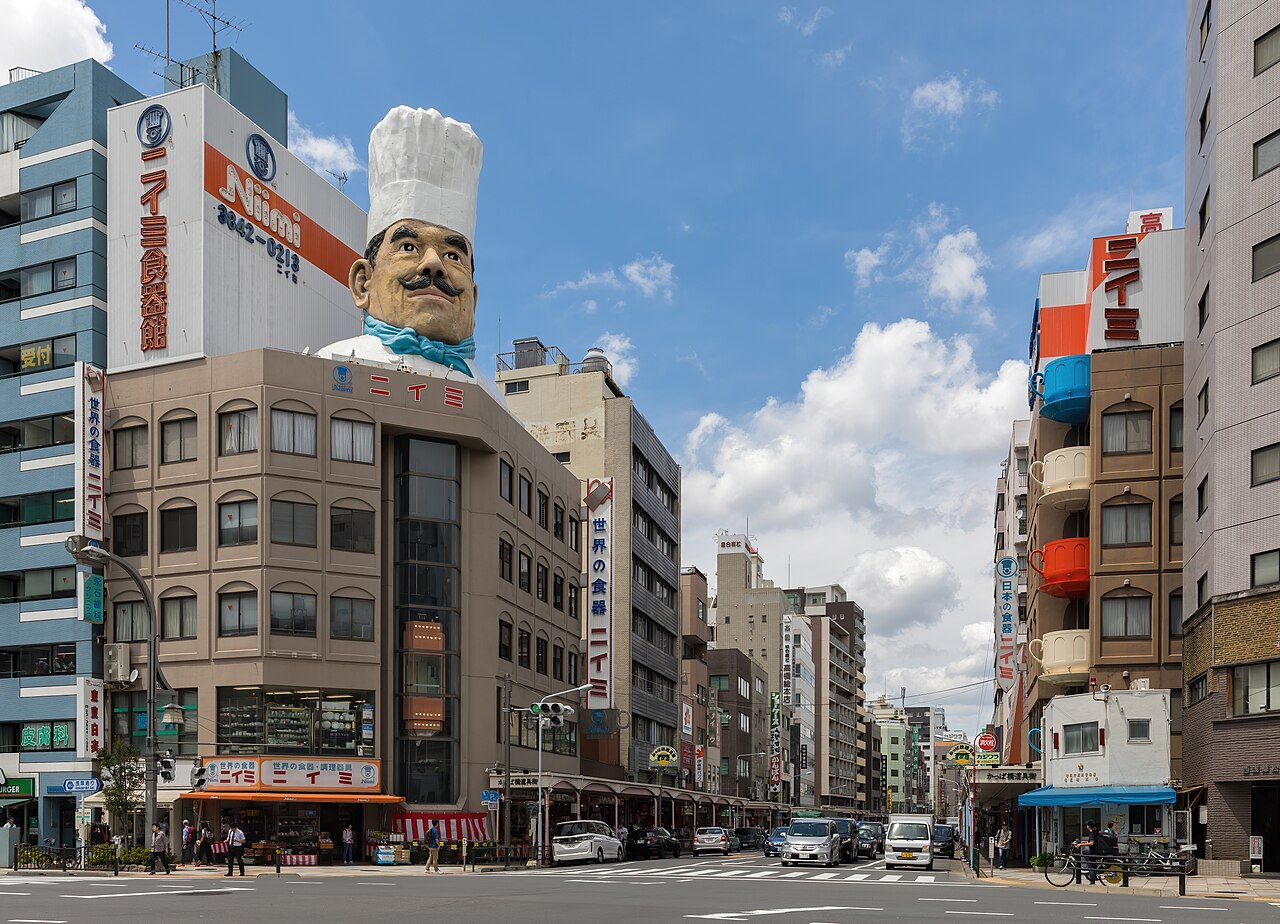
The photographs show the southern street corner in June 2019 and an adjacent street view toward Tokyo Skytree in August 2013. They provide streetscape context, including traffic, signs and passersby; they are not a current shop map or an instruction to stand in the road for a photograph. Use the association's present map and keep pavements and entrances clear while you browse.
A focused outing might end with one well-understood tool, or with no purchase because the available choices did not suit you. Both can be sensible results. Stop comparing when an item meets the job and budget you set, rather than continuing until tiredness makes the decision. Keep enough room in the day to pack the purchase properly and enjoy the next part of the trip without carrying an awkward impulse buy everywhere.
Research-based guide prepared by JAPANOVA. Traveler accounts are individual self-reports; comparisons are editorial analysis.