At the Tottori Sand Dunes, a short look across the landscape and a walk up the sandy ridge are different outings. Choose between them after checking weather, the return journey and how much exposed walking your party wants. The dunes do not need a camel ride or a perfect photograph to be worthwhile. A flexible plan also recognizes that a nearby indoor attraction is not automatically a cool, all-weather refuge.
- Decide whether the ridge is the main goal
- Use the visitor center before committing to the sand
- Treat camel rides and other extras as optional
- Two reports make the weather trade-off concrete
- Check what the Sand Museum actually offers
- Choose the version of the day you will enjoy
- Facility and shop information
Decide whether the ridge is the main goal
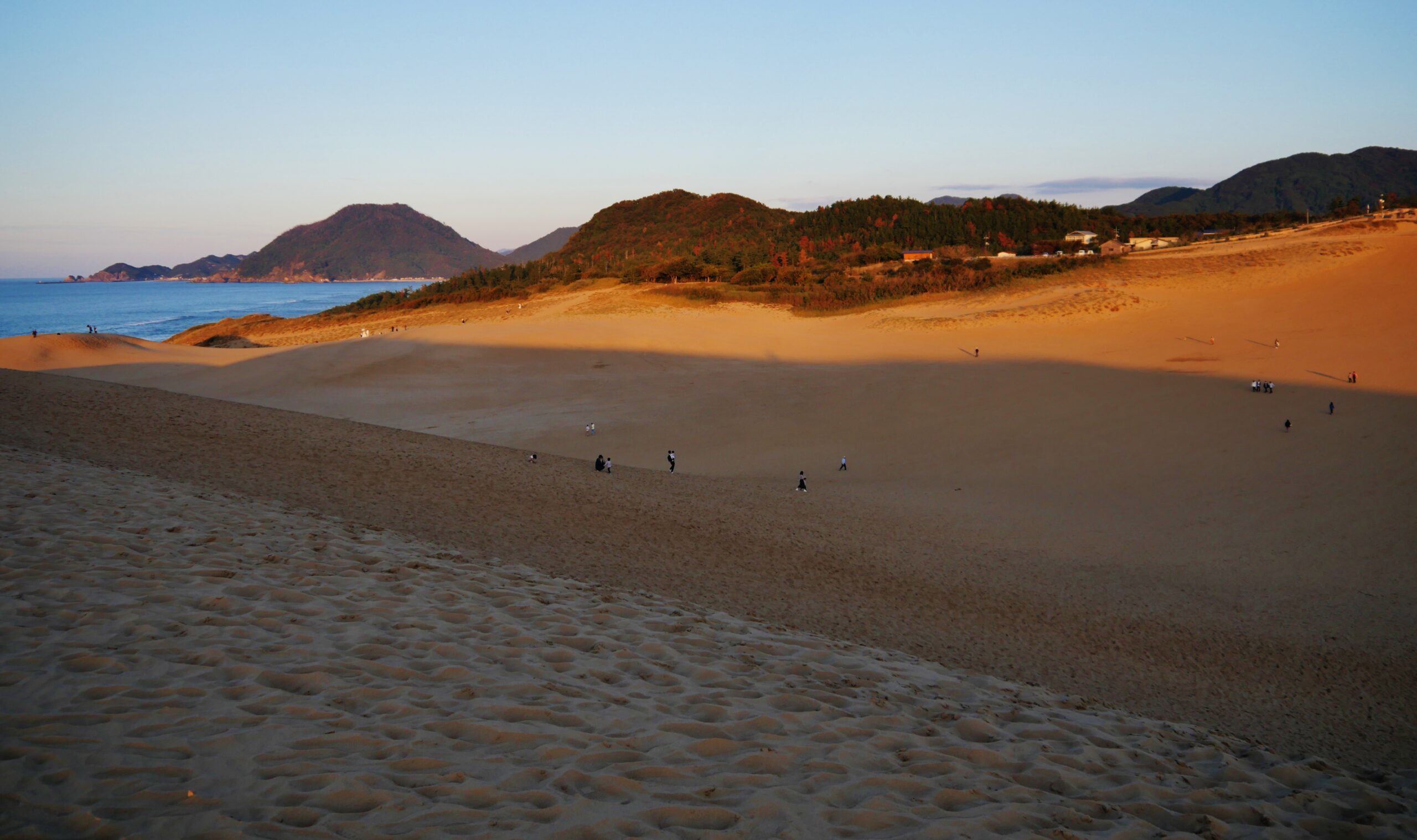
Start by asking what you want to experience: the scale of the dunes from a viewpoint, the effort of walking over sand, or time looking toward the sea. A photograph taken from a comfortable position does not show how the same ground will feel underfoot. The ridge image here records an October 2023 landscape; it does not establish today's wind, temperature or sand conditions.
If the walk itself is the attraction, allow it its own block of time rather than squeezing it between transport connections. If you mainly want to see the landscape, a shorter visit can be a deliberate choice. Agree on a turnaround point with your companions before anyone feels committed to continuing simply because other walkers are farther ahead. Returning over sand still belongs in the day's effort.
Use the visitor center before committing to the sand
The official visitor center offers exploration and highlight maps and links to current wind information. Stop there before choosing a route, particularly when the weather differs from the photographs you used to plan. Ask what the present conditions mean for the walk you have in mind. A general map is a starting point; current advice and posted restrictions take precedence.
Tottori's official tourism guidance warns about exposed conditions and hot sand, including the problems of walking barefoot or in unsuitable footwear. Bring water and appropriate sun or weather protection for your actual day, and do not assume a coastal breeze removes exposure. Follow the dunes' rules, including the prohibition on writing messages in the sand. Leave the landscape available for the next visitor rather than creating a temporary sign for a photograph.
Treat camel rides and other extras as optional
Do not build the visit around a camel ride described in an old diary. The current tourism page says that, from 2024, weekends, holidays and listed vacation periods offer commemorative photographs only, with most weekdays also focused mainly on photographs. Activities can stop because of weather or the animals' condition. A current photo opportunity and a historical riding experience are different products; check the operator before making either the reason for your journey.
Check each attraction's own operating information before paying or making a special journey. A lift or a ride associated with the dunes should not be assumed to transport you over every sandy ridge you want to reach. Keep the spending decision separate: would you still want the outing without the optional activity? If the answer is yes, reserve your attention and time for the landscape first.
Two reports make the weather trade-off concrete
Pikyorin's account of a 2023 Tottori trip describes visiting in rain, finding the wet walk less pleasant and missing a camel ride because of the weather, while still appreciating the dunes' scale and view. In astrolia's April 2023 report, a foggy first look was followed by a sunny return on a taxi outing; camel rides had finished by the time of that visit.
Both writers missed the camel activity, for different reported reasons. Their landscape experiences also differed with the weather. That is evidence for keeping extras optional and the route adaptable, not proof that rain makes every visit poor or that a return visit will produce sunshine. JAPANOVA's inference is to protect a flexible outdoor block when the dunes matter most, and to avoid buying a tight schedule based on a best-case photograph.
Check what the Sand Museum actually offers
The Sand Museum can be an alternative focus, but first check the exhibition calendar. Its official information lists the 2026 exhibition period from April 24 through January 3, 2027, with preparation closures outside exhibition periods. The museum also explains that the exhibition room is maintained near outdoor temperature to protect the works. Indoor does not mean reliably cool in summer or warm in winter.
Choose it because you want to see sand sculpture, rather than treating admission as an automatic solution to every weather problem. Its rules prohibit commercial photography without permission, including use in a monetized blog; this article therefore uses dune landscapes rather than photographs of exhibited sculptures. Visitors should check the facility's rules for their intended photography and avoid assuming a photographer's image license overrides an artwork restriction.
Choose the version of the day you will enjoy
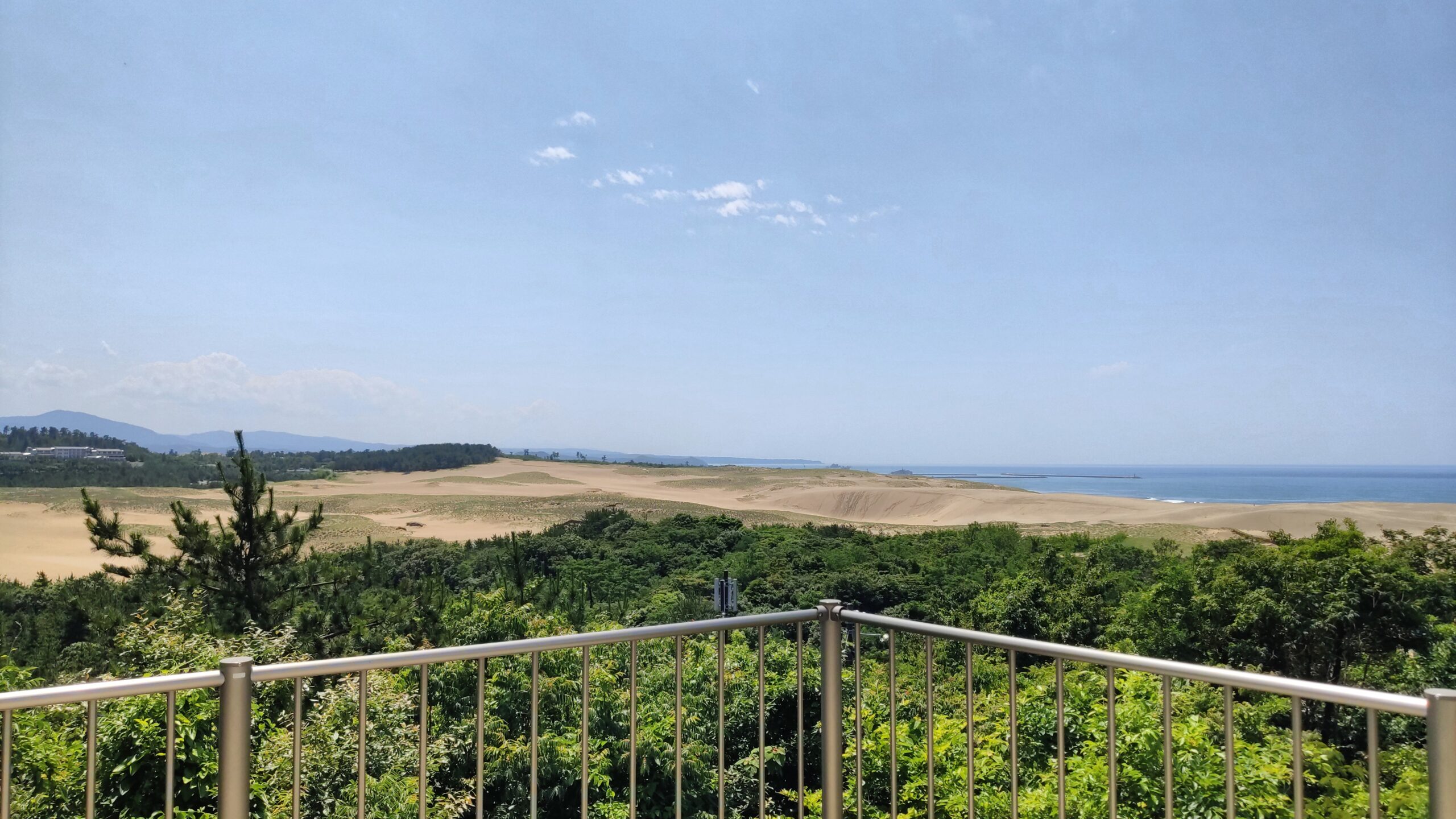
For an outdoor-first visit, check conditions at the visitor center, choose an achievable sandy route and preserve time for the return. For a shorter landscape visit, keep the viewpoint stop intentional and decide separately whether the museum's current exhibition appeals. The second photograph illustrates the wider dunes and sea from a raised viewpoint in June 2021; it is not directions to a named viewing facility.
Before leaving town, save your return transport, the visitor center information and any museum calendar you intend to use. Leave room to shorten the walk, and avoid tying an evening reservation to an exact finish time on the sand. The best-value dunes visit is the version that fits the weather and your party, whether that means a ridge walk, a brief view or an art-focused afternoon nearby.
Research-based guide prepared by JAPANOVA. Traveler accounts are individual self-reports; comparisons are editorial analysis.
Facility and shop information
- Tottori Sand Dunes Visitor Center — checked 2026-10-19
- The Sand Museum visitor information — checked 2026-10-19