For a Kanazawa sightseeing day, decide which journeys you want to avoid walking before buying a bus pass. The standard adult Loop Bus fare is JPY 220 per ride, while the Kanazawa One Day Pass costs JPY 800. If every planned ride is a JPY 220 Loop Bus journey, three rides cost JPY 660 and four cost JPY 880. That makes separate fares JPY 140 cheaper for three rides, or the pass JPY 80 cheaper for four. These calculations use the operator's published prices checked on 26 October 2026; they are not a universal threshold for buses with different fares.
- When the JPY 800 day pass makes sense
- Choose the direction at Kanazawa Station
- Start with clusters rather than a complete loop
- Match the ticket to the trips you will actually take
- What two visitors did differently
- Read the boarding instructions for this bus
- Build a day with one useful bus jump
- Keep a return option when the weather changes
When the JPY 800 day pass makes sense
Count the rides you actually expect to use. One adult Loop Bus ride costs JPY 220; two cost JPY 440. Walking between nearby destinations and paying for one or two useful bus journeys may therefore cost less than the pass. Do not add unnecessary rides to justify buying it. Weather, fatigue and mobility can change the sensible itinerary, but calculate the fares for that itinerary rather than assuming a pass is always the cheapest choice.
The pass covers its selected day of use, not a rolling 24-hour period. It includes the Loop Bus and designated participating local services within the stated coverage area. Highway, express, regular sightseeing and Light-up buses are excluded. A Light-up bus may support a payment method that the daytime pass does not cover: payment acceptance and pass validity are different questions. Check the current coverage map and buy from an authorized sales location before boarding; the operator does not sell this pass on the bus. The simple comparison above excludes attraction discounts and journeys with other fare amounts.
Choose the direction at Kanazawa Station
Both Loop Bus directions depart from stop 7 at Kanazawa Station's East Gate. The operator's route-specific timetable, revised on 1 April 2026, lists Right Loop departures roughly every 15 minutes from 08:30 to 18:00 and Left Loop departures roughly every 20 minutes from 08:38 to 17:58. These are station departure ranges, not the last departure from every sightseeing stop. Recheck the timetable for your day and allow for traffic or diversions.
From the station, the Right Loop reaches the Omicho Market area and Hashibacho before the Kenrokuen area. The Left Loop approaches Korinbo and Hirokoji before Kenrokuen, then Hashibacho. Match the direction to your next stop rather than boarding whichever loop arrives first. The useful choice depends on your destination, its entrance and the walking you are happy to do; this is not a claim that one direction is always faster.
Start with clusters rather than a complete loop
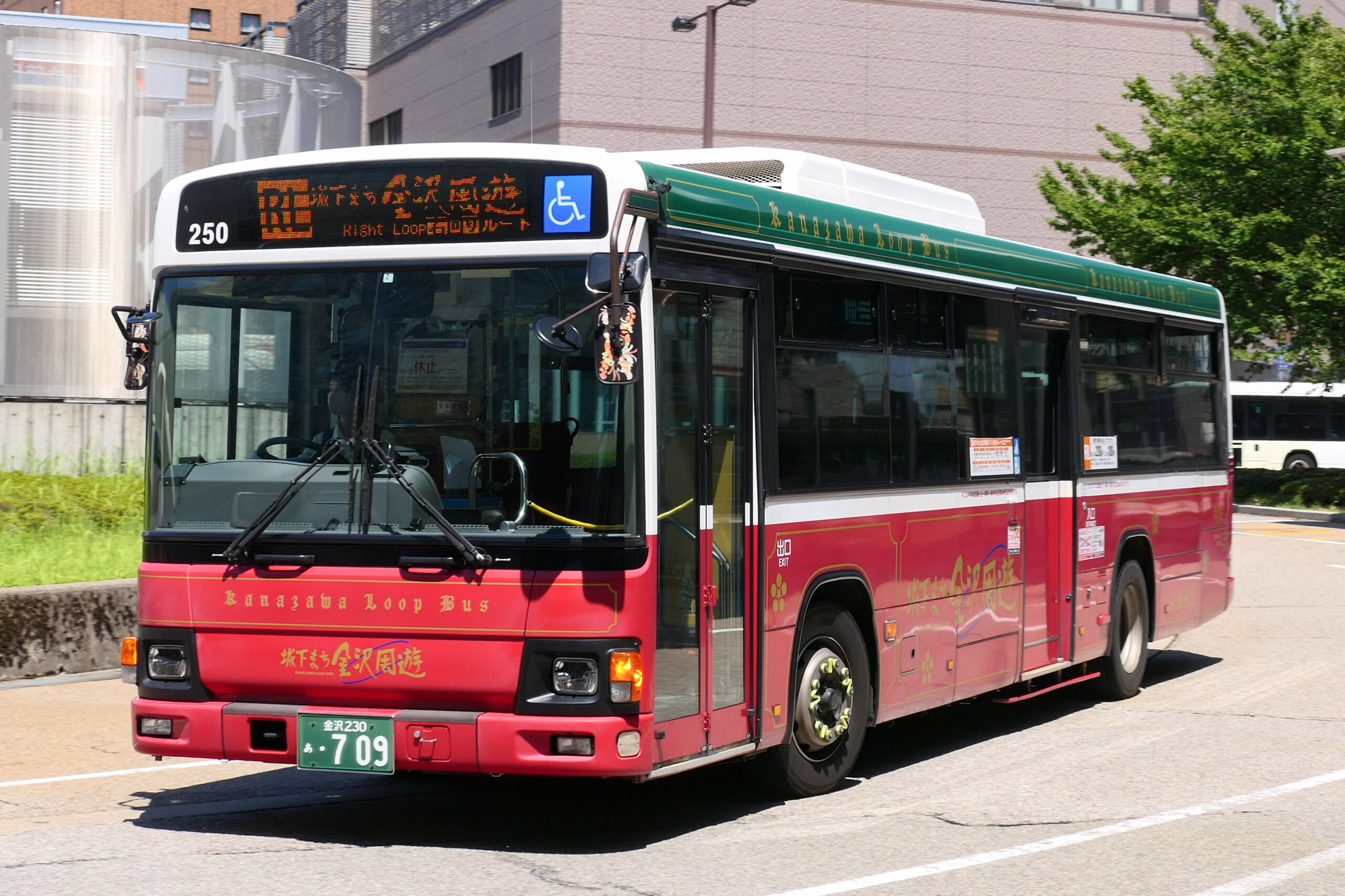
Put your actual destinations on a map before buying anything. Keep the garden and castle visit together if those are your priorities, then decide whether a tea-house district or the market is a separate outing. Distinguish the walk between places from the walking you will do inside them. Saving a short bus fare is a poor bargain when it leaves you too tired for the attraction you came to see.
For an arrival day, locate your hotel's entrance and ask about luggage storage before treating the loop bus as a tour with suitcases. For a full sightseeing day, leave bags behind where that service is confirmed. A route that is comfortable with a small day bag can feel quite different in rain with luggage. Neither walking nor the bus is automatically the easiest option for every party.
Match the ticket to the trips you will actually take
Hokutetsu's One Day Pass costs JPY 800 for an adult and JPY 400 for a child; the Loop Bus single fare is JPY 220 for an adult and JPY 110 for a child. Check the applicable fare category for your party. The pass includes participating services only within its designated area. It is not unlimited transport everywhere around Kanazawa, and the adult Loop Bus arithmetic above does not establish the cheapest option for a mixed-fare family itinerary.
Before paying, add the current separate fares for the journeys you genuinely expect to make and compare the current pass total. Do not add rides just to make a pass feel worthwhile. If you plan to walk almost all day and ride once, separate payment deserves consideration. If weather or mobility makes several rides likely, the convenience of a valid pass may matter alongside the arithmetic. Confirm the covered stops on the latest map.
What two visitors did differently
A visitor describing a September 2025 stay walked from the castle area to Higashi Chaya, then used a bus to reach Omicho Market. Another solo traveler, writing about a 2020 visit, chose to walk from the station to accommodation rather than work out buses after dark. These are two ways of managing effort and uncertainty, not evidence that the buses are difficult or that all distances are short.
Both accounts make transport part of a personal day rather than an attraction checklist. The first combined walking with a useful link; the second accepted a walk to simplify arrival. JAPANOVA's suggestion is to identify your own awkward segment beforehand. Familiarity, luggage and weather change that answer. Neither old account establishes today's route, fare, accessibility or evening service.
Read the boarding instructions for this bus
On the Loop Bus, no numbered ticket is required. Request your stop and pay when leaving, or show the valid day pass as instructed. Flat buses use a different payment procedure: pay when boarding. Do not assume the previous bus's procedure applies to the next one. For cash payment, have the correct fare ready or use the change machine; the fare box itself does not give change.
For Suica, PASMO, ICOCA and other nationwide transport IC cards, check the actual vehicle. The operator's current Japanese page specifically says the Loop Bus and Light-up Bus accept these cards, but not when an ordinary route-bus vehicle substitutes for them. Its general English boarding guide still gives a broader restriction on Kanazawa buses. Use the route-specific information and confirm with the driver if a replacement vehicle arrives; carry a cash fallback. Neither statement means every local bus accepts your card. Follow the reader instructions on your vehicle, and ask the driver before boarding if you are unsure.
Contactless bank cards are a separate payment option from transport IC cards. On services listed by the operator as accepting bank-card contactless payment, the instructions say to tap the orange reader when boarding and again when leaving, after the bus has stopped and the door is open. Tell the driver before paying for multiple people, a child or a concession fare. Do not assume a bank card gives the day-pass price or automatically caps a day's spending.
Check the destination display and direction before boarding. Right and Left Loop describe different circuits; a familiar stop name does not establish which direction will get you there most conveniently. Save the stop near your destination and the entrance you intend to use. A bus stop beside a large park is not necessarily beside the door or gate you need.
Build a day with one useful bus jump
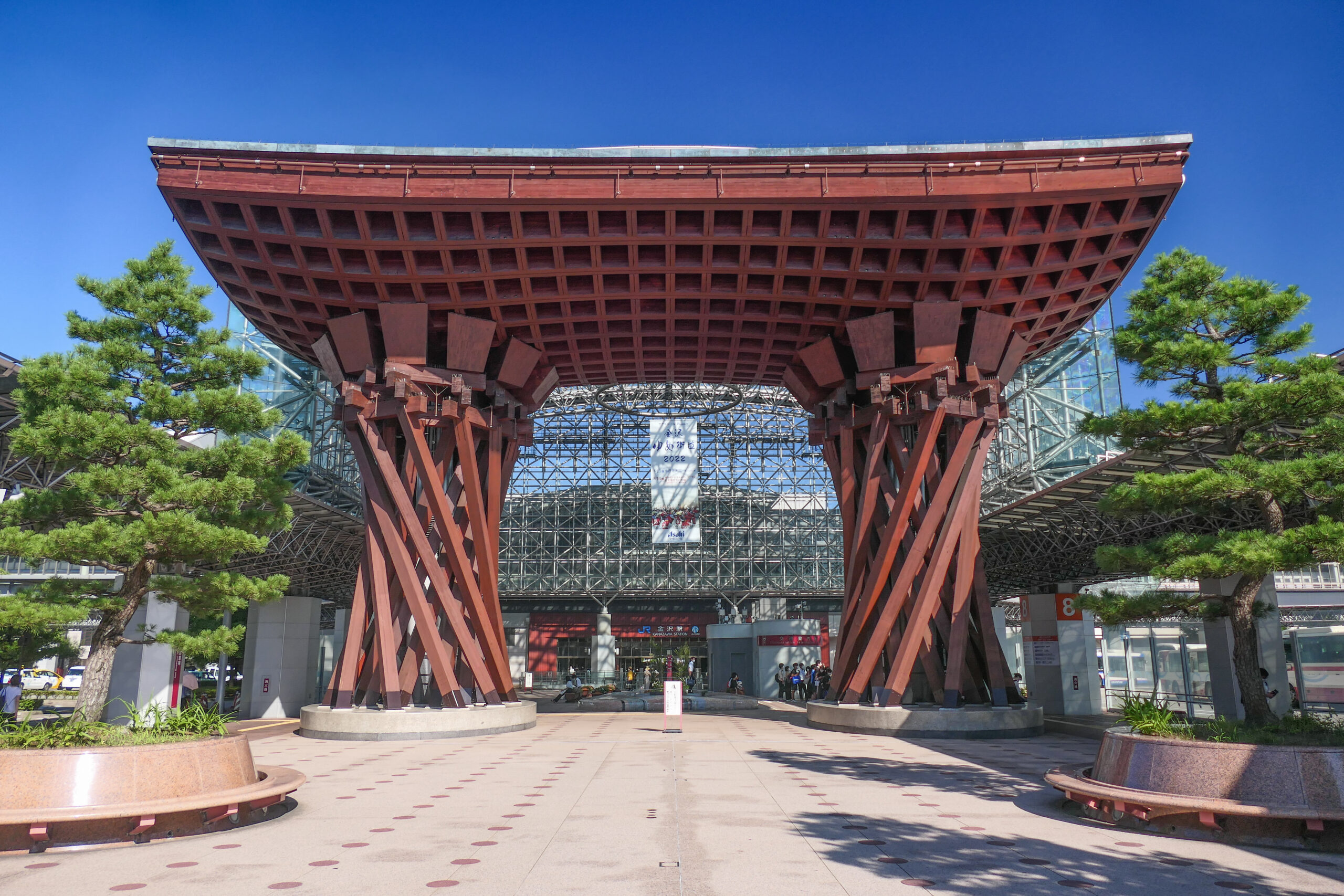
An editorial template is a focused morning cluster, a deliberate move to the next area, and a flexible final walk. For example, begin with the garden and castle, then choose one district for the afternoon rather than repeatedly crossing the same ground. Keep lunch in an area you already intend to visit instead of buying transport around a restaurant ranking.
Reverse the order if your admission arrangements, weather or booked activity require it. The point is to reduce backtracking, not to claim that one fixed circuit is best. If a queue or unexpected delay appears, dropping an optional stop is usually more useful than trying to recover every minute by rushing.
Keep a return option when the weather changes
Save the operator's current map and check the last useful connection before heading out late. Do not assume the service continues throughout dinner or that a special evening bus accepts a daytime pass. Keep a separate payment fallback and enough battery to read your route.
Before committing to the ticket, settle three things: the journeys you want to avoid walking, the services that cover them, and the total your group will pay. A good Kanazawa transport plan gives you energy and flexibility for the city. Completing a whole bus loop is optional.
Research-based guide prepared by JAPANOVA. Traveler accounts are individual self-reports; comparisons are editorial analysis.