Give the dinosaur museum the day it needs
For a two-day Fukui stop centered on dinosaurs, use the arrival day for a modest city visit and keep the fuller day for Katsuyama. Fukui Prefectural Dinosaur Museum is in Katsuyama, not beside Fukui Station. The distinction matters when choosing a ticket time and deciding whether an overnight stay earns its place in your trip.
This suggested plan suits someone who wants to read the exhibits or consider an additional activity. It does not promise that two days cover the prefecture. If the museum is only a passing interest, compare the complete journey with the other things you want to do before buying tickets. If it is the main reason for traveling, avoid giving it only the hours left after several unrelated stops.
Choose the museum product before choosing the train
At our October 21, 2026 check, the operator sold permanent-exhibition admission, combinations with a special exhibition or fossil research activity, and a separate Field Station outing. These are different experiences. Start with permanent-exhibition admission if your priority is exploring the indoor displays. The operator describes skeletons, fossils, reconstructions and moving dinosaur models; read the labels rather than assuming every displayed skeleton is an original fossil.
The Japanese ticket guide says dated, timed advance purchase is the normal arrangement, with sales opening 60 days ahead. Same-day machines sell ordinary admission only when capacity remains. Do not build a journey around the hope of spare tickets. An entry window is also not the amount of time you must spend inside: the guide does not impose a visit duration after ordinary admission.
Adding a research activity changes the day. The operator describes approximately 120 minutes and an elementary-school minimum age, with elementary pupils needing an accompanying adult or equivalent person to register too. The Field Station is a separate bus-tour experience, not a room you automatically reach with ordinary admission. Check its operating season, meeting requirements and ticket inclusions before adding it. Neither option should be squeezed into an assumed spare hour.
At the same check, individual general admission to the permanent exhibition was JPY 1,000. Special exhibitions and activities have their own prices. Regular museum hours were 9 a.m. to 5 p.m., with last admission at 4:30 p.m. Usual closures include the second and fourth Wednesdays, shifted after a holiday, with summer exceptions and possible additional closures. Check the actual calendar before fixing your Fukui nights.
Map the local connection in both directions
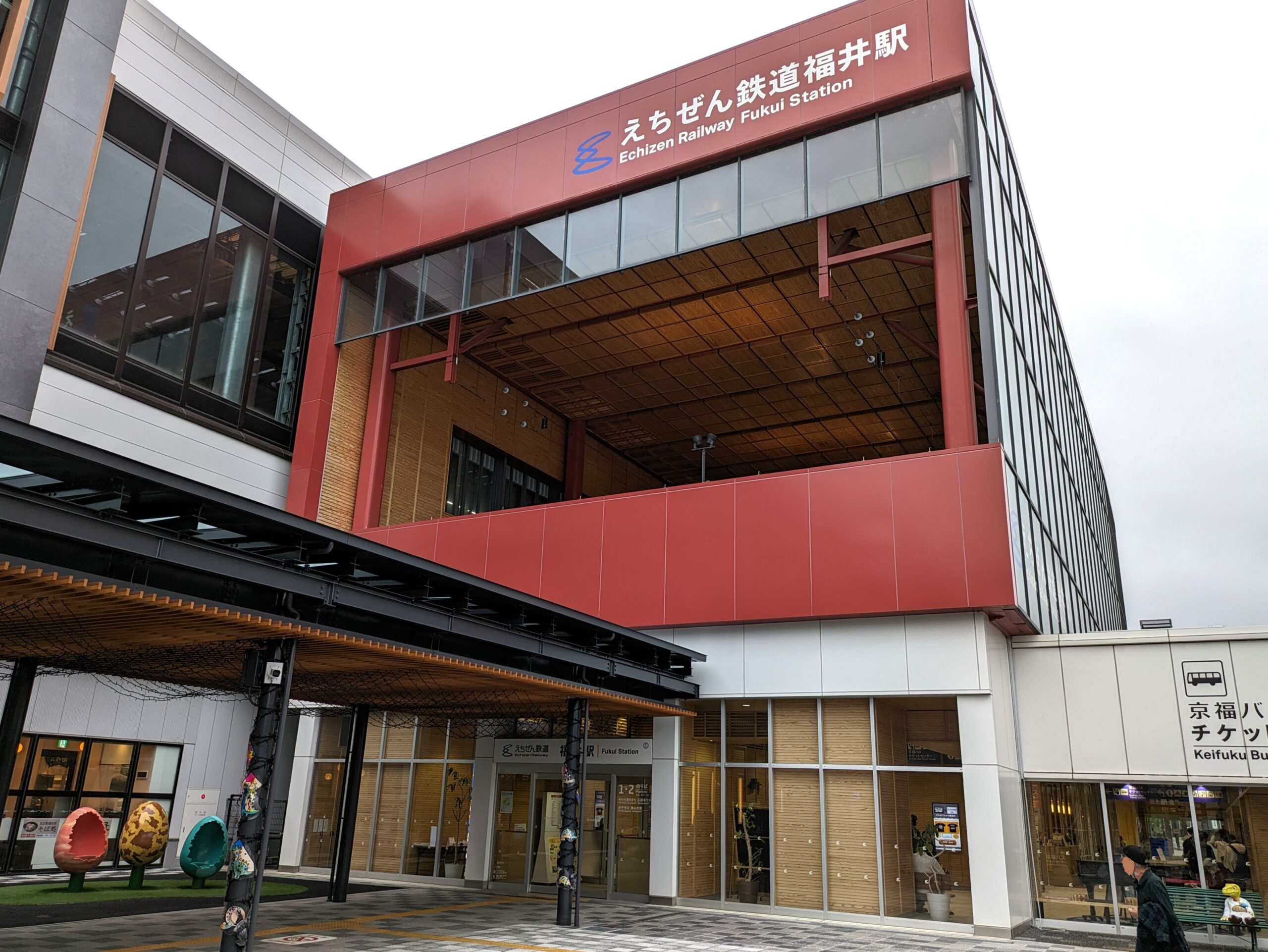
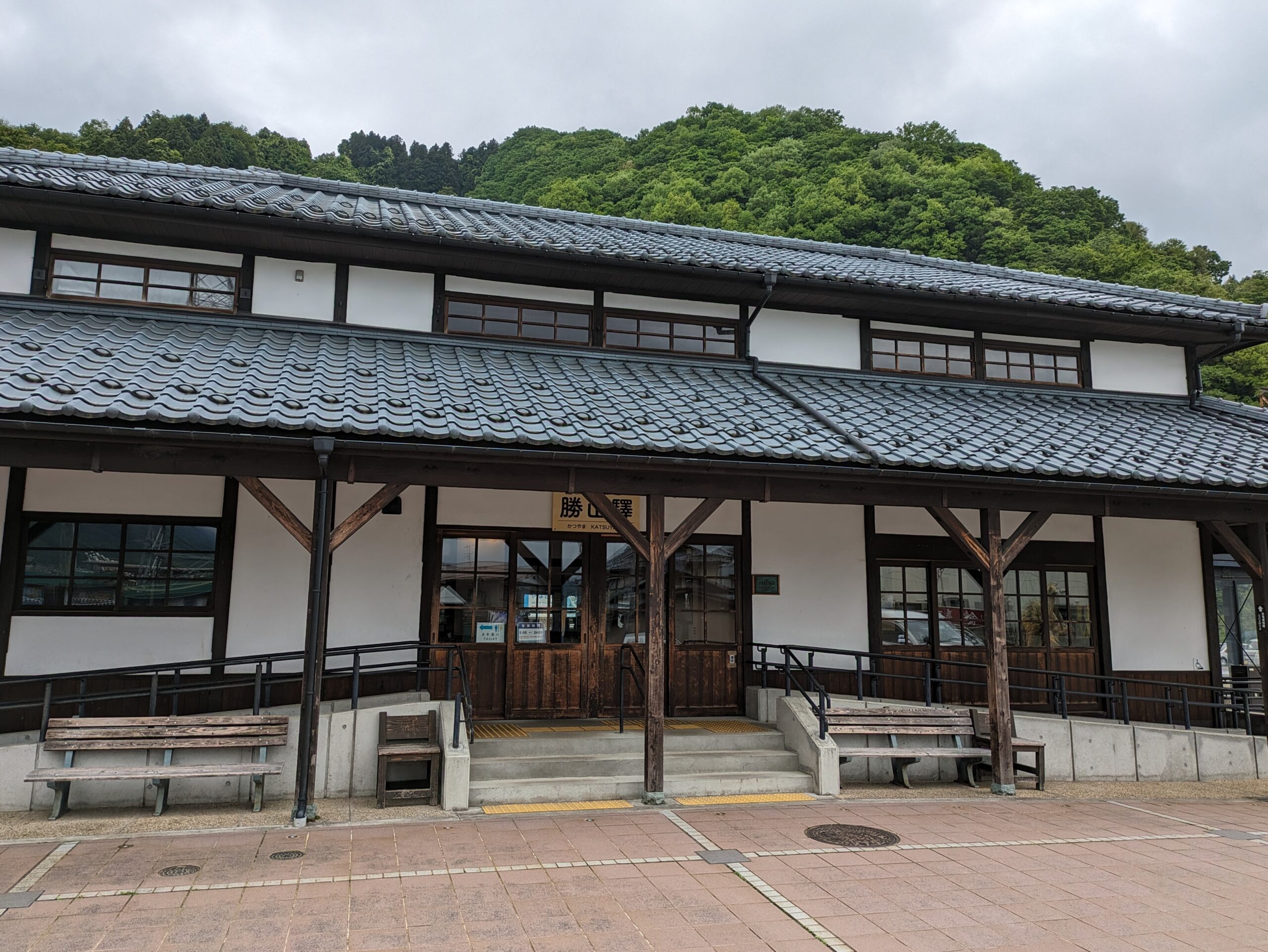
The museum’s Japanese access guide describes changing at Fukui to the Echizen Railway Katsuyama Eiheiji Line, riding to Katsuyama, then using a bus or taxi. It links onward connection information and also lists direct-bus options with their own operating arrangements. Compare the routes for your actual date; do not treat a rail arrival at Fukui as arrival at the museum.
Write down the museum entry window, the connection you intend to take, and a later fallback that still works. Do the same for the return before buying an onward long-distance train. A route that looks comfortable when every transfer succeeds may be much less useful if a missed connection consumes the remaining margin.
Choose a transport package only after checking its current inclusions. A ticket covering a train and local bus is not automatically a museum reservation. Equally, a special themed service may have different conditions from an ordinary train. Historic trip reports are useful for understanding effort, but their quoted package prices are not today’s booking instructions.
Keep the arrival day in Fukui city
Yokokan Garden offers a city-based option if you arrive with time and interest remaining. Fukui City’s facility guide describes the pond and the view from the residence rooms, and estimates a walk of about 15 minutes from Fukui Station. Allow more for finding your way and managing luggage; that estimate is not a guaranteed door-to-door time.
The guide lists regular opening from 9 a.m. to 7 p.m. through November 5, changing to a 5 p.m. close from November 6 through the end of February. Last entry is 30 minutes before closing. Some paths close after dark or in heavy snow, so later opening does not mean every part of the garden remains accessible.
For visits in late October 2026, note a specific restriction: from noon on October 29 through closing on October 31, the residence interior is unavailable and only the garden is open free of charge. The morning of October 29 remains ordinary paid opening. If sitting inside to look across the pond is the reason you want to visit, choose another date rather than expecting the same experience during the restriction.
Two museum visits show different ways to run short
A family’s June 2024 account describes traveling from Kyoto by public transport, spending around three to four hours at the dinosaur museum with lunch, and leaving the outdoor areas unexplored before returning. That was their chosen day, not a universal minimum or a current journey-time estimate.
A separate November 2019 traveler combined several Fukui sights and later wished they had given the museum area more attention. The report also describes having rushed Eiheiji. Its transport details predate major changes, so the useful lesson is the writer’s regret about dividing attention, not the old fares or route descriptions.
The accounts differ in scope: one concentrated on the museum after a long approach, while the other fitted it among multiple visits. Both support asking what you are willing to omit. For this plan, the answer is to keep the city outing flexible and protect the museum day, rather than making a temple, coast visit and research activity all compulsory.
Leave room for the trip afterward
Choose the order around the museum calendar and your arrival time. A short city evening followed by a fuller Katsuyama day can work well, but reverse or shorten it if the dates demand. An overnight is useful when it removes pressure from the museum visit; it is not automatically cheaper than a day trip.
Before committing, confirm the exact ticket product, the local connections, a meal opportunity and your luggage arrangements. Leave time for the exhibits that catch your attention. A plan built around one real interest is easier to adjust than a list whose success depends on visiting every named place.
Research-based guide prepared by JAPANOVA. Traveler accounts are individual self-reports; comparisons are editorial analysis.
Facility and shop information
- Fukui Prefectural Dinosaur Museum — checked 2026-10-20
- Fukui Prefectural Dinosaur Museum — checked 2026-10-20
- Fukui Prefectural Dinosaur Museum — checked 2026-10-20
- Fukui Prefectural Dinosaur Museum — checked 2026-10-20
- Fukui City, Yokokan Garden facility administration — checked 2026-10-20
- Fukui City, Yokokan Garden facility administration — checked 2026-10-20