Kanazawa Station and Korinbo solve different hotel problems. The station area reduces the effort around rail arrivals and departures; Korinbo gives you a different starting point for time spent in the city. Before choosing, count how many days actually revolve around the station. A one-night stop and a four-night stay with only one excursion do not need the same answer.
Choose the station for a short rail-focused stay
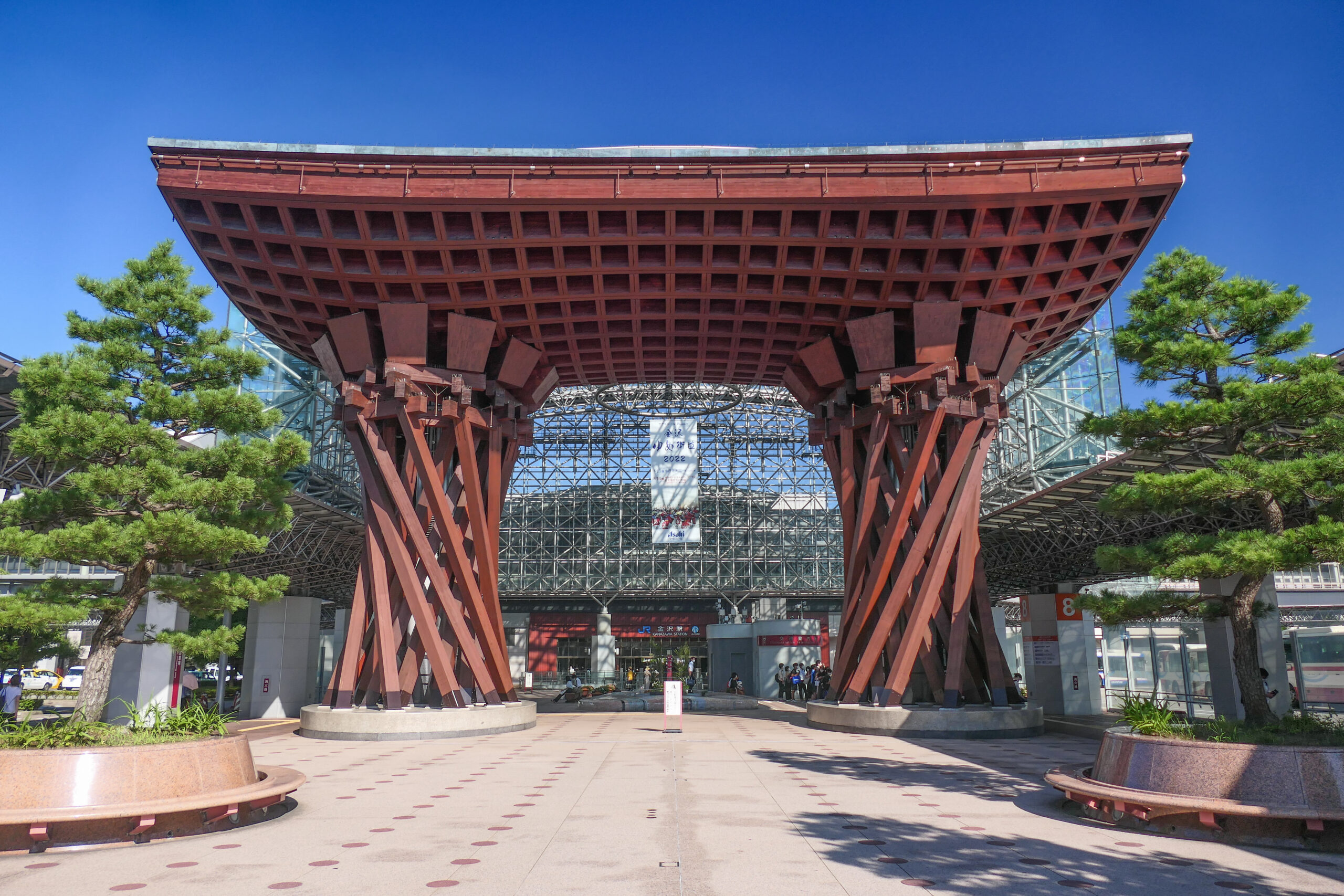
Start near the station if you arrive late, leave early or expect several journeys that begin there. This is a planning preference, not a claim that every station hotel is convenient. Compare the particular exit, crossing and hotel entrance. A property described as near Kanazawa Station still needs a real route from the train you will use.
Hotel Nikko Kanazawa provides a concrete example. Its official access page places it near the Kenrokuen, or east, exit and describes an approximately three-minute walk. That is a useful location reference, not an endorsement of its room quality or price. Use the hotel's own directions to understand which side of the station serves your arrival.
Choose Korinbo for the days between the train journeys

Korinbo is an alternative to inspect when your priorities are city walks and returning to the hotel between outings. Kanazawa's official accommodation directory distinguishes the station area from Korinbo and the Samurai District area, among others. The choice is not simply central versus remote; it is which part of your actual itinerary you want outside the door.
Kanazawa Tokyu Hotel's official material gives an address at 2-1-1 Korinbo and describes access by bus or taxi from the station. That makes the arrival transfer part of the comparison. Do not assume a particular fare, journey duration or available taxi from a general hotel description. Check the route and transport options for your arrival time.
What actual stays reveal about the tradeoff
In one public discussion, a traveler who stayed at Tokyu Stay for three nights also took a Shirakawa-go day trip and liked being near Omicho Market. They found the station walk manageable but used a taxi on arrival because of rain and luggage. Another visitor in the same discussion reported staying near Omicho Market and enjoying the location. These are two different stays, but neither is a review of the two example hotels above.
The shared point is the value of being near the places you repeatedly use. The first account also preserves a cost often omitted from area recommendations: a walk that feels pleasant without luggage may not be your preferred arrival route in rain. Their experience supports making a transport allowance, not assuming that everyone will enjoy the same walk.
Compare the same room conditions
Shortlist one property in each area and compare equivalent terms. Keep occupancy, bed configuration, room size, breakfast and cancellation conditions aligned. A lower headline rate with a much earlier cancellation deadline is a different product. Check the total payable for all nights and any charges collected at the hotel, rather than comparing only the first search result.
For a longer stay, inspect practical details such as laundry, luggage storage and whether your selected room actually has the amenity described elsewhere on the site. A review of another room category does not settle your booking. Write down your two or three non-negotiable requirements and use them to eliminate unsuitable rooms before choosing an area winner.
Test the walk with luggage and weather in mind
Map three journeys from each candidate: your arrival, your most important city outing and your departure. Add the trip back after dinner. Do this with actual addresses rather than pins placed in the middle of a neighborhood. If a taxi is your backup for rain, include that possibility in the comparison instead of treating it as a surprise after booking.
You need not change hotels to experience both areas. Moving rooms uses time and creates another luggage decision. For a short city stay, choosing one suitable base and making deliberate trips elsewhere is usually the simpler planning template. Split accommodation only when it solves a specific problem in your itinerary.
Make the booking fit the whole stay
Choose the station when the arrival and departure advantage matters most. Give Korinbo or another city-center address serious consideration when most days are spent in the city itself. There is no verified universal cheapest or best district. Compare the actual room and routes, reserve under terms you understand, and keep the exact hotel entrance saved for arrival.
Research-based guide prepared by JAPANOVA. Traveler accounts are individual self-reports; comparisons are editorial analysis.
Facility and shop information
- Hotel Nikko Kanazawa — checked 2026-10-19
- Kanazawa Tokyu Hotel — checked 2026-10-19