For Nagasaki Lantern Festival, the first booking decision is whether you want a flexible evening in the city or a tightly timed return elsewhere. The city has announced February 5–21, 2027 as the planned festival period. That is enough to compare accommodation and transport dates, but it does not establish the timing of every performance. Plan around the evening you want, then add verified performance details.
- Use the announced 2027 dates and keep the program separate
- Decide whether an overnight stay solves a real problem
- Two 2026 visits show why the best evening differs
- Build a compact route with a way to stop
- Read the pictures as history, not the next festival’s layout
- Make flexible reservations and verify the remaining details
Use the announced 2027 dates and keep the program separate
Nagasaki's official announcement, published May 21, 2026, gives a planned seventeen-day festival from Friday, February 5 to Sunday, February 21, 2027. Treat that as the current date announcement and recheck it before making a nonrefundable purchase. The official festival hub also lists the Emperor Parade for February 13 and 20, 2027, and the Mazu procession for February 7 and 14. Those are useful dates for choosing a stay, but this guide has not verified every performance time, route or lighting timetable. Do not silently relabel a previous year's schedule for 2027.
For a procession-focused trip, compare those published dates with accommodation availability, then recheck the official notice for times, routes and any changes before making an expensive booking. If your priority is the lantern-lit city atmosphere, comparing a room for an evening within the announced period can be useful now. Keep a note of what is confirmed and what you still need to check, rather than letting an attractive old photograph answer both questions.
Decide whether an overnight stay solves a real problem
Staying in Nagasaki can give you a place to leave purchases, rest and return to after an evening walk. It also adds a room cost that a shorter visit may not need. Compare the actual total for your party, including transport and the cancellation conditions, rather than assuming an overnight stay always saves money or a day trip always costs less.
For a day trip, work backward from the final service you are willing to take. Leave a margin for reaching the station and boarding; the last photograph should not determine your return. For an overnight stay, compare the accommodation's location with the areas you want to visit and how you will reach them. A convenient room is useful because it supports your route, not simply because its listing uses the festival's name.
Two 2026 visits show why the best evening differs
うみくま's March 2026 family account describes waiting through two or three trams, a child struggling with food and walking, and the value of returning to a conveniently located hotel for a rest. The trip eventually worked with adjustments. In まめクロ's 2026 account, a later visit to Central Park felt rewarding because rain reflected the lantern light and fewer people remained after food stalls had begun closing.
Both accounts suggest that pacing matters, but they support different choices. A family may value a shorter outing and an easy retreat; an adult interested in evening photography may accept wet conditions and a later walk. The second account does not prove that every venue will be quiet after 21:00, and the first does not establish that buses are always faster than trams. Use these experiences to choose your own tradeoff, not a universal best hour.
Build a compact route with a way to stop
Start with one area you most want to see and add a second only if the group still wants to walk. Save the current official venue map when it is issued, mark your accommodation or return stop and identify where you can leave the route. Trying to cover every venue can make the final part of the evening feel like transport between photographs.
With children or companions who tire easily, agree on a rest point and a shorter version before going out. Keep food plans flexible enough to avoid making one crowded restaurant essential. For photographs, step aside without blocking the walking flow and follow staff directions. A quiet-looking picture may have been taken between groups or in a different year; it is not evidence that a tripod or a long stop will be appropriate on your date.
Read the pictures as history, not the next festival’s layout
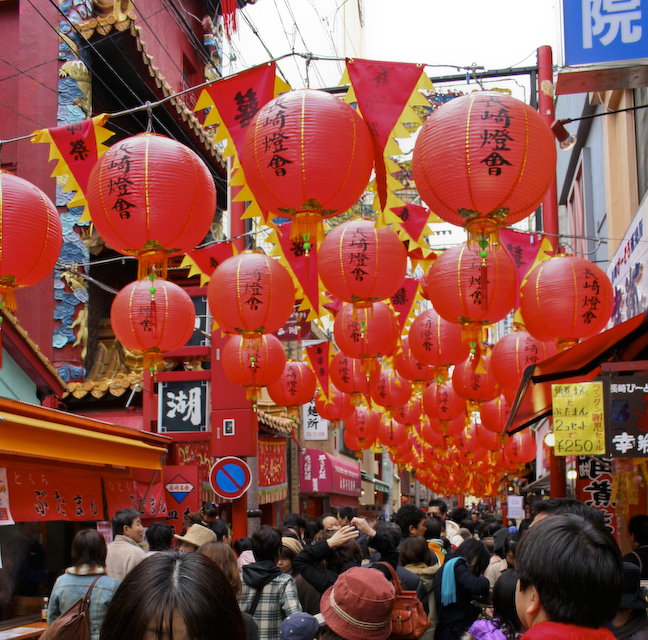
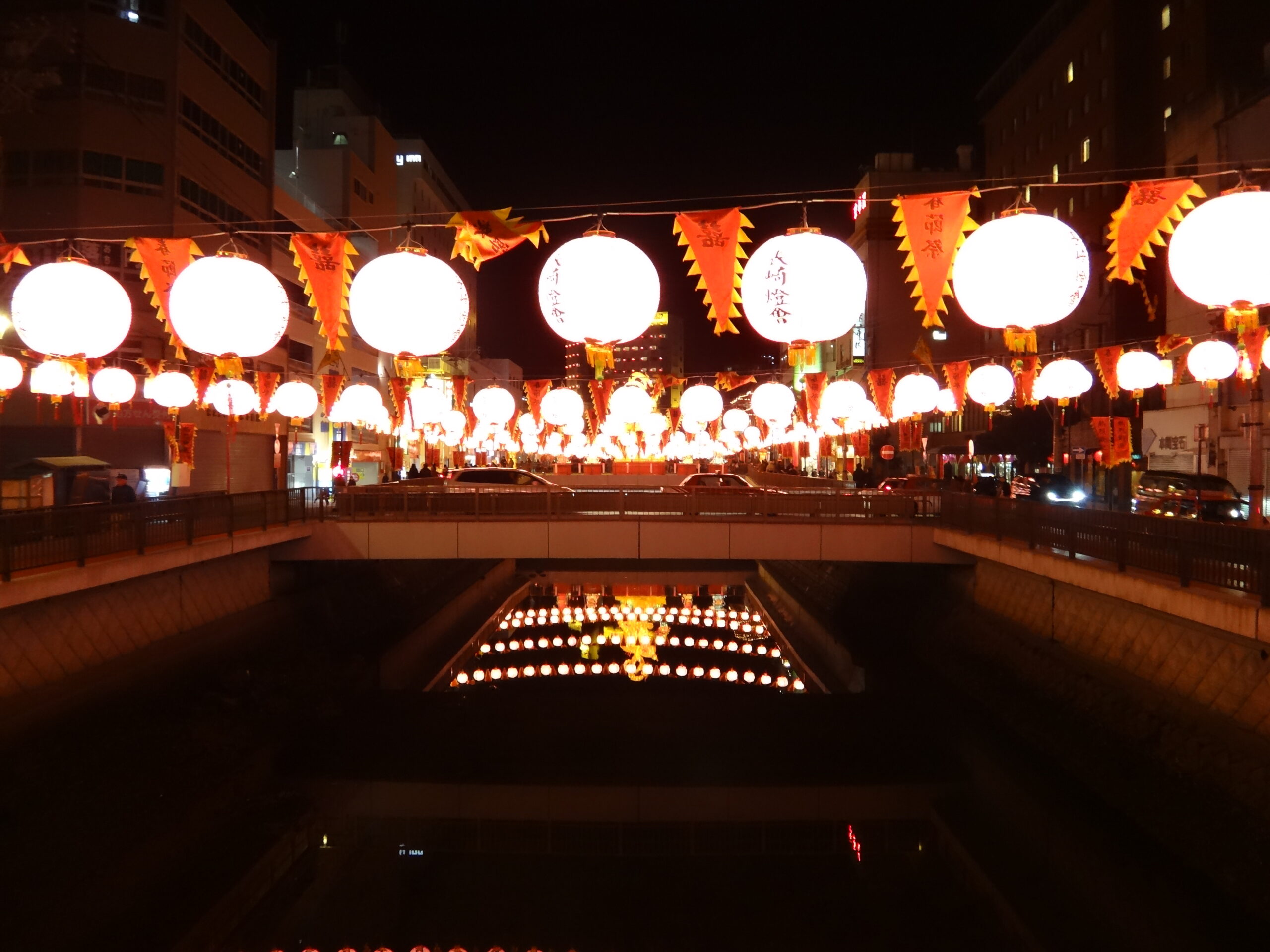
The main image shows lanterns over the Dozamachi waterway in February 2014. The Chinatown street photograph is from February 2007. Their simple hanging lanterns show part of the setting, while deliberately avoiding a promise about next year's large display objects, positions or colors. Buildings, routes and arrangements may have changed since either image was made.
Rain can add reflections, as one visitor enjoyed, but it also changes the comfort of standing and walking outside. Choose footwear and layers appropriate to the forecast and keep a route back if the weather deteriorates. Do not turn a writer's attractive rainy-night account into a recommendation to remain out during warnings or unsafe conditions. Check official event notices for any weather-related changes and let those instructions take priority over the route you saved.
Make flexible reservations and verify the remaining details
When comparing rooms, read the actual cancellation deadline, included charges and payment terms before deciding. For transport, check the service you will use on the actual date rather than copying the family diary's route or an older festival's special-service information. If a booking is nonrefundable, be comfortable with the city visit even if the specific performance you hoped for is not available.
Choose an overnight stay when time to rest and enjoy the evening is worth the added cost. Choose a shorter visit when your return is comfortable and a compact route satisfies your interest. Keep the announced February 5–21 dates distinct from performance times and route details still requiring a fresh check. That lets you move forward with a sensible trip plan now while avoiding a booking built around details that have not yet been established for 2027.
Research-based guide prepared by JAPANOVA. Traveler accounts are individual self-reports; comparisons are editorial analysis.