A lavender trip to Farm Tomita should begin with a decision about flowers, dates and transport, rather than a promise that one famous photograph can be repeated. If lavender itself is essential, build flexibility into the plan. If a wider flower-farm visit would still satisfy you, choose a practical journey and check what is actually on view. Those are different holidays, even when they use the same destination name.
- Check the farm before committing to a bloom-dependent trip
- Separate the main farm from Lavender East
- Read two peak-season visits as different planning perspectives
- Plan the return before adding another flower stop
- Give non-lavender flowers an honest role
- Budget for the day rather than a list of lavender purchases
- Facility and shop information
Check the farm before committing to a bloom-dependent trip
Start with the farm's own flower information, field map and live webcam. A historical report of full bloom cannot predict the state of a future summer. Look at the dates attached to updates and decide what evidence you need before committing to a nonrefundable journey. If you are comparing travel dates months ahead, treat them as choices under uncertainty rather than as a confirmed flowering appointment.
The main website displayed opening hours of 09:30–16:30 when checked on October 19, 2026, and explicitly prohibited admission outside opening hours. These are current displayed hours, not a guarantee for next summer. Recheck the calendar for your visit. Do not follow an old suggestion to arrive before opening merely because an empty-field photograph makes early access look attractive.
Separate the main farm from Lavender East
Lavender East is a different field, not another name for the entire Farm Tomita visit. The operator's 2026 notice listed June 20–July 20 and 09:30–16:30 for that season, which has already ended. Those dates are historical planning context. They must not be silently reused for 2027 or taken as permission to enter the field after the announced season.
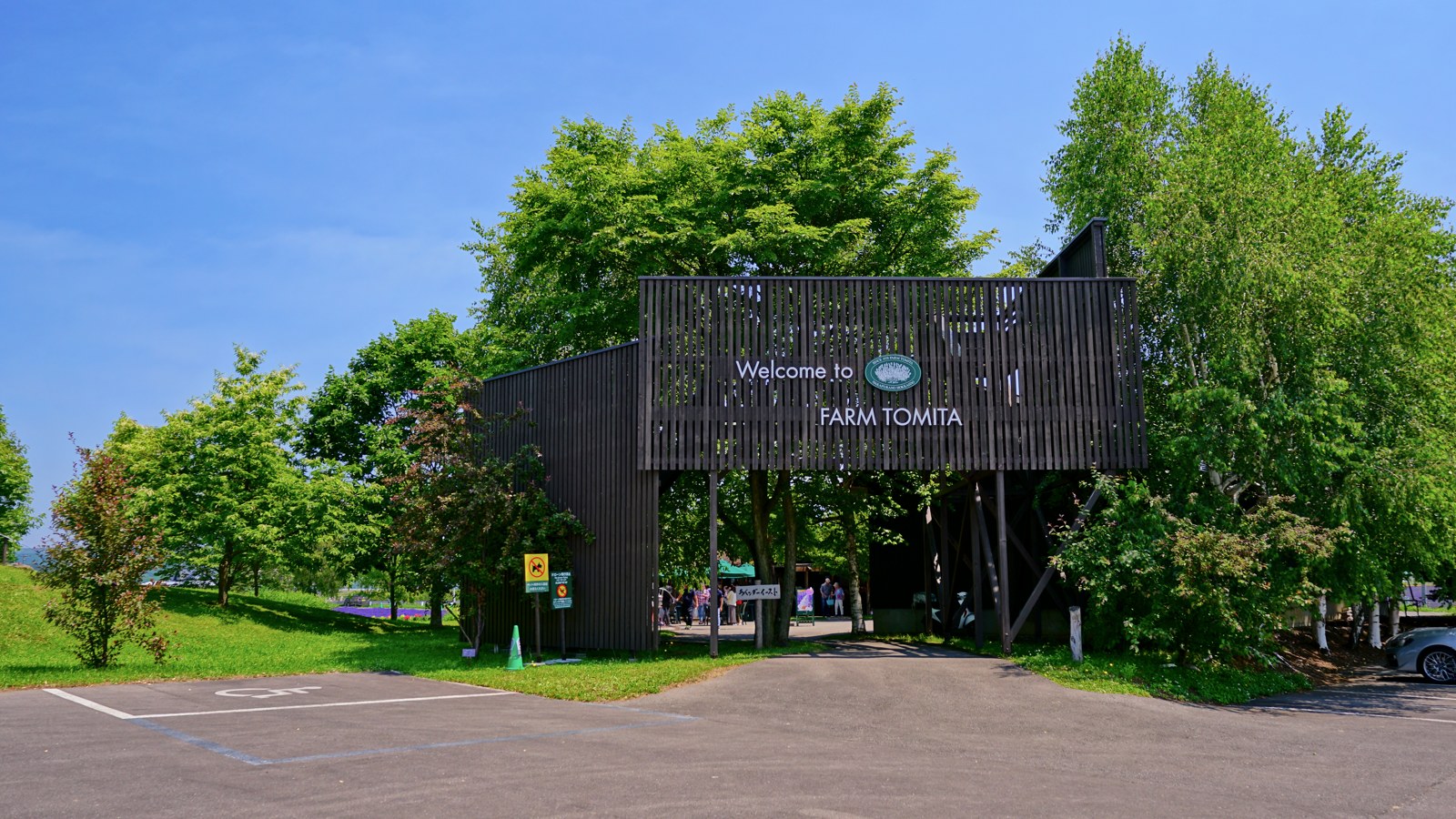
The July 2026 entrance photograph shows Farm Tomita signage and the visitor approach, not proof of flowering on another date. Use the official access map to identify the site you intend to reach. The operator describes Lavender East as four kilometers from the main farm. Decide separately whether a second field fits your transport and interests instead of assuming a spare few minutes covers the connection.
Read two peak-season visits as different planning perspectives
Furano Guide's first-person 2019 account follows several named fields, shops and a viewpoint, while emphasizing busy parking, gravel or dirt paths and hills. Stefan Schauwecker's July 14, 2009 visit reports full bloom at that time and admires the farm's presentation, while identifying weekend crowds as a drawback. Both enjoyed the flowers but acknowledged that sharing the site changes the experience.
The detailed local circuit and the older bloom snapshot answer different questions. One helps identify practical friction; the other records a particular season. Neither supplies a current crowd forecast or a future bloom guarantee. Our inference is to choose a compact group of fields, wear footwear suited to the outing and leave room for waiting. A large photographic circuit is optional, not a measure of a successful visit.
Plan the return before adding another flower stop
Use the operator's access page to compare arrival points, then verify the transport provider's actual service for your date. The farm distinguishes Lavender Farm Station from Nakafurano Station and points readers to seasonal railway information. Do not assume that a station associated with a summer sightseeing train has the same service throughout the year. A familiar name on an old diary is not a usable timetable.
Write down the arrival point, the route to the farm and the return departure you intend to make. Include time to walk back and find the correct platform or stop. Drivers should check current parking instructions and avoid public-road or tour-bus spaces prohibited by the operator. If the return already feels tight, remove an extra stop before buying another activity or extending the circuit.
Give non-lavender flowers an honest role
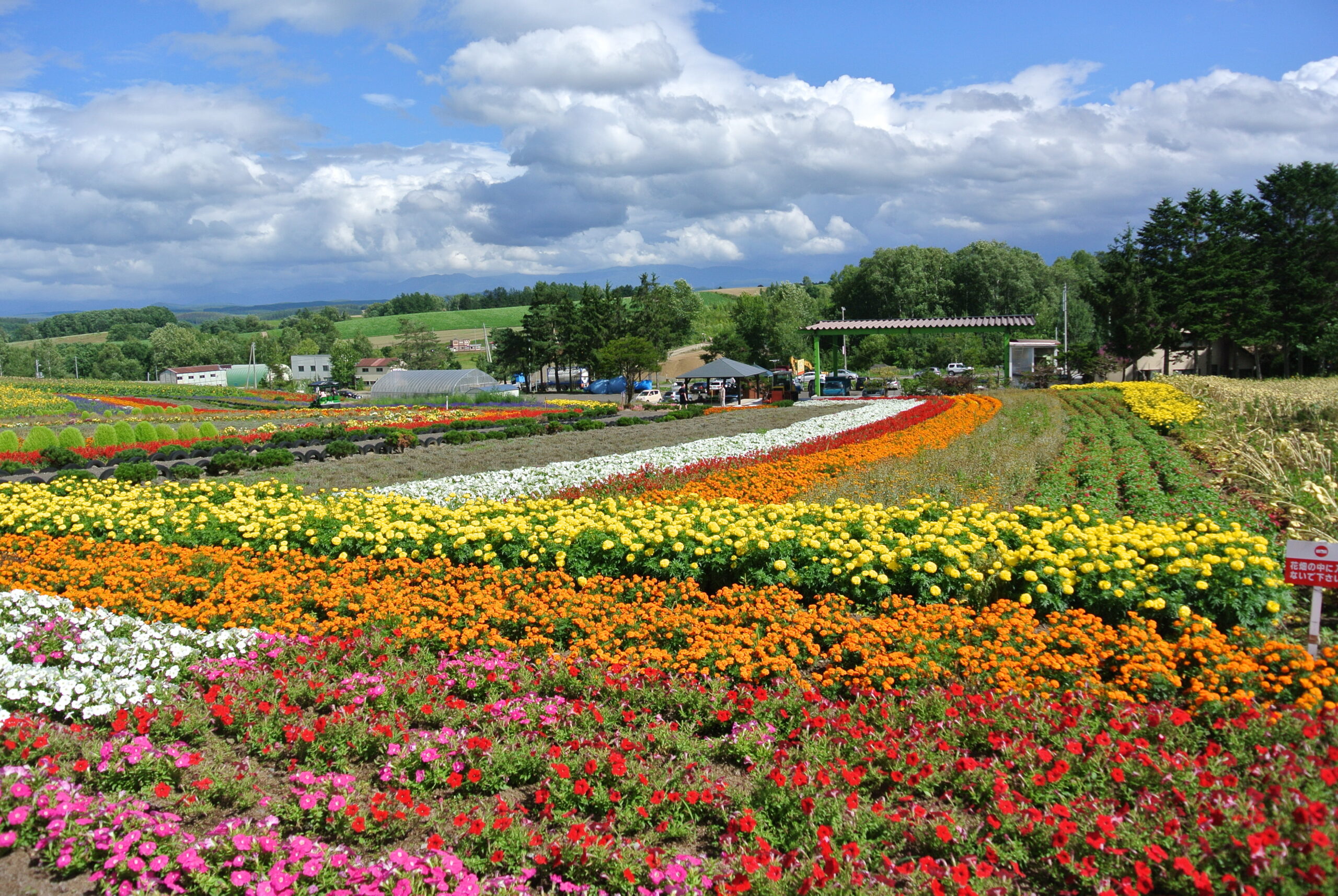
The August 2014 photograph shows bands of colorful flowers, including orange, yellow, pink and white planting. It is not a photograph of a purple lavender field at its peak. That distinction helps set expectations: a pleasant flower-farm outing and a lavender-focused visit can overlap without being identical. Decide whether a different display would still make the journey worthwhile for your party.
If lavender is the sole reason for traveling, check fresh information close to departure and keep a realistic alternative. If flowers more broadly are the interest, choose a small number of fields from the current map and enjoy what the farm is presenting. Avoid entering planted areas to imitate a photograph. Leave paths usable for other visitors while stopping to look or take pictures.
Budget for the day rather than a list of lavender purchases
Separate transport, meals and optional shopping in your budget. A themed snack or scented souvenir can be enjoyable without becoming a requirement of visiting the fields. Ask about ingredients or product use when relevant, and inspect sizes before buying gifts that will remain in your luggage. Do not transfer a traveler's old purchase price into a present-day spending plan.
The strongest plan has one clear main purpose and one practical fallback. For a bloom-dependent visit, spend your research effort on dated flower updates and flexible arrangements. For a general farm outing, protect a comfortable route and return journey. In either case, the decision should work even if the exact color, weather and number of visitors differ from the image that first inspired the trip.
Research-based guide prepared by JAPANOVA. Traveler accounts are individual self-reports; comparisons are editorial analysis.
Facility and shop information
- Farm Tomita — checked 2026-10-19
- Farm Tomita2026LavenderEastnotice — checked 2026-10-19
- Farm Tomita access — checked 2026-10-19