A summer trip to the Shimanto River can mean learning to paddle your own kayak, sharing a guided family raft or staying on land when the conditions do not suit. Those are different bookings, not interchangeable versions of the same photograph. Start with the youngest participant, the amount of paddling your group wants and the operator's actual availability. Then build the rest of the rural travel day around that choice.
- Choose a kayak or shared raft before picking a date
- Compare the current cost and the time it commits
- Summer enjoyment depends on the actual river conditions
- Two summer families found different kinds of involvement
- Keep arrival, food and the return separate from the tour
- Leave one part of the day flexible
Choose a kayak or shared raft before picking a date
Canoekan's half-day canoe tour involves a beginner lesson and a river descent selected for the day's conditions. Its family rafting page describes a shared inflatable-boat outing focused on river play rather than an extreme whitewater ride. Decide whether each traveler wants responsibility for paddling an individual craft or would prefer the group format. Enthusiasm from one confident adult does not answer that question for everybody.
The current canoe FAQ accepts solo school participants from the upper elementary years with a height of at least 140 centimeters; younger elementary children may join a limited-availability tandem with an adult. The rafting page is presented for ages three and above, but eligibility and the particular child's fit still need confirming when reserving. Ask about your actual party instead of treating a general family label as automatic approval.
Compare the current cost and the time it commits
Checked on October 19, 2026, the half-day canoe page lists JPY 6,500 per participant. Family rafting lists JPY 6,000 per person and JPY 3,500 for preschool children, with reservations starting from two adults. Compare the whole party's cost and confirm the intended session before arranging transport. A small difference per person may matter once it is multiplied across a family.
The canoe page describes around ninety minutes of river descent after instruction; rafting describes roughly two and a half hours. Neither should be treated as the complete time from your accommodation door to your next attraction. The morning reception window is 08:30–09:00, and the afternoon canoe option requires reception by 13:00. The operator warns that sessions may not run and late arrivals cannot simply join after the group has started.
Summer enjoyment depends on the actual river conditions
Canoekan says rain alone does not necessarily stop a tour, while thunder, strong wind or high water can cause cancellation. Water level can also change the route or distance. Check directly before departure and keep that uncertainty separate from an accommodation cancellation policy: a canceled activity does not automatically mean your room can be canceled without charge.
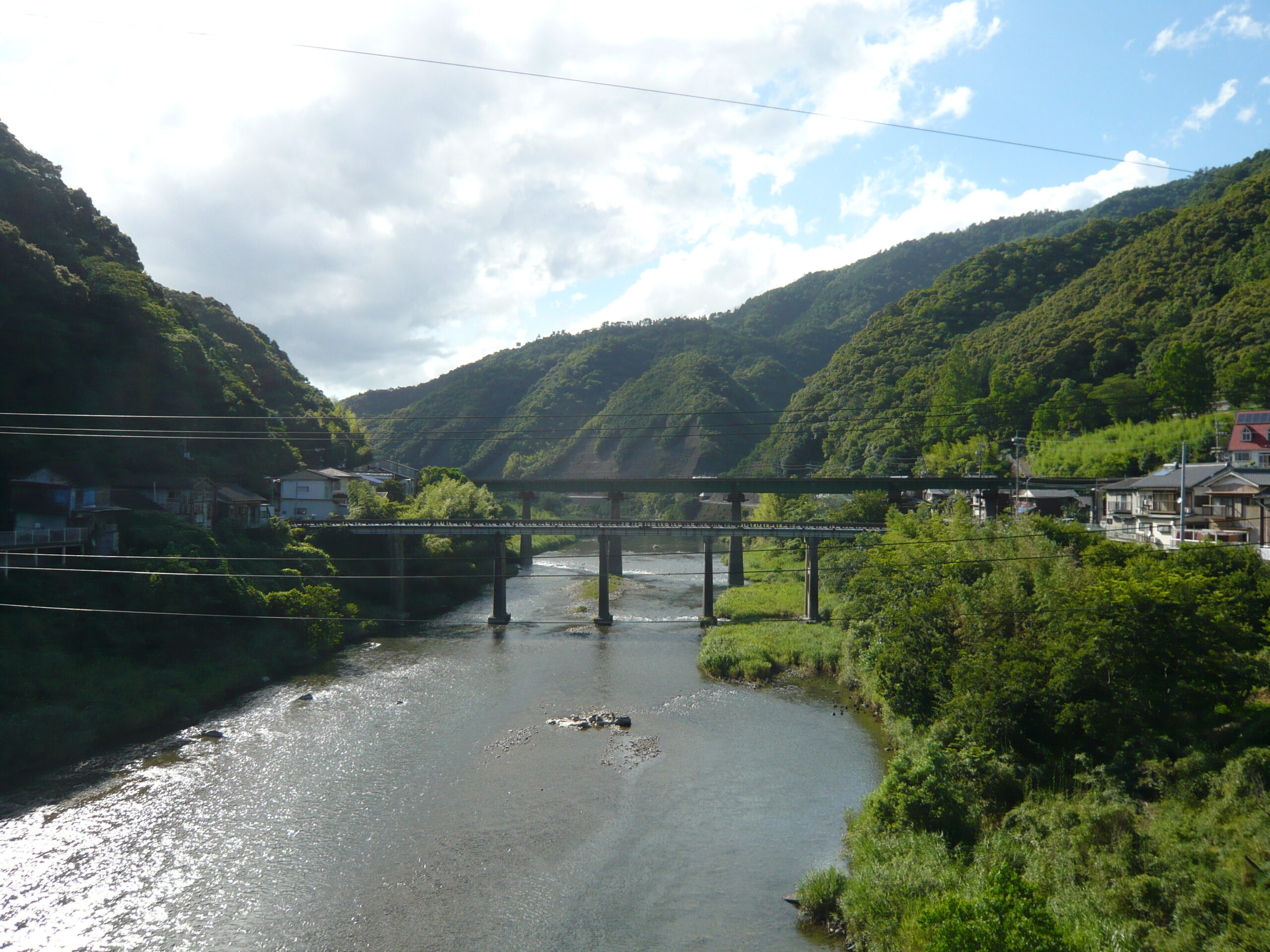
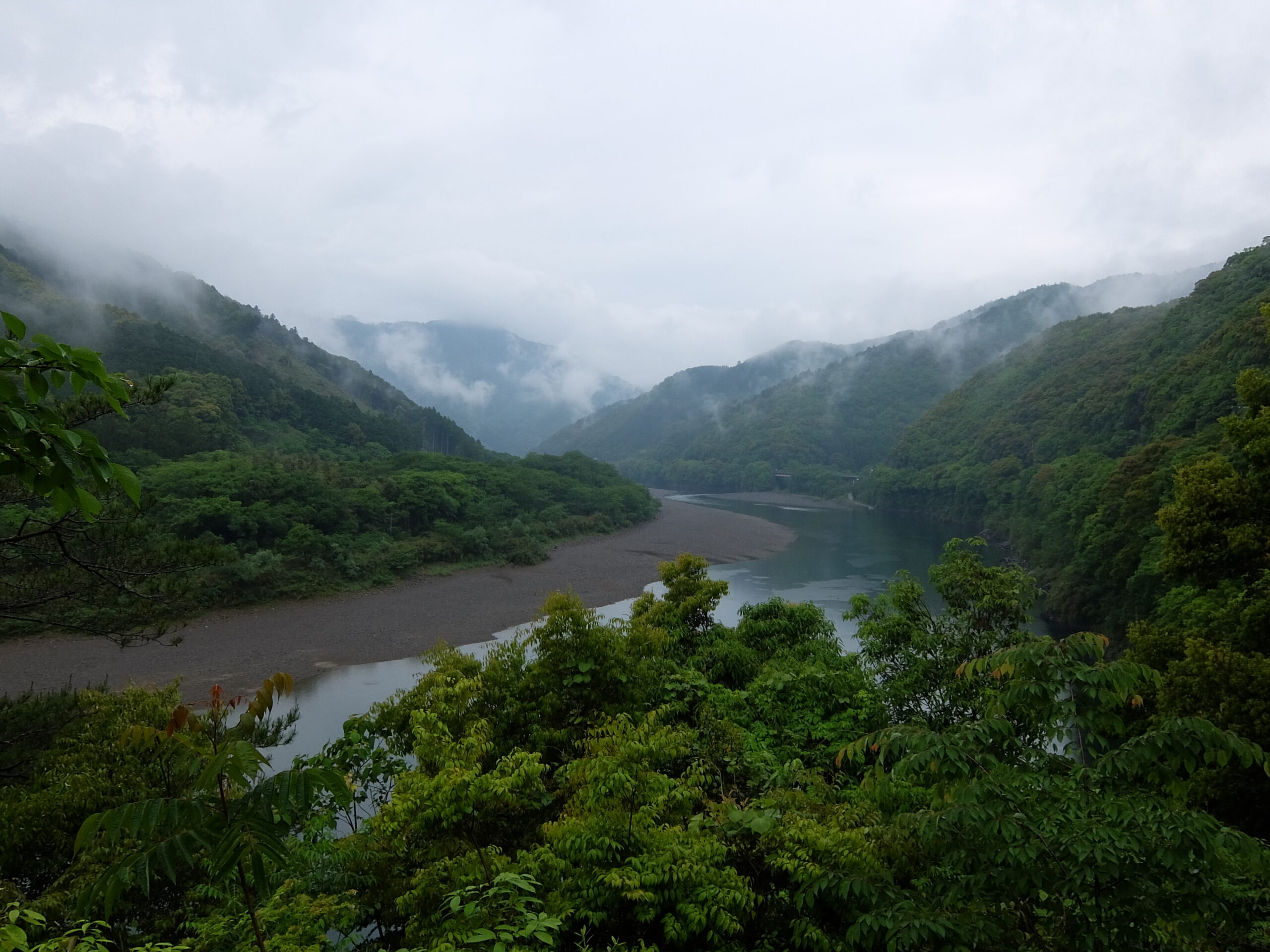
Prepare to get wet, following the operator's current clothing and equipment list. Its summer guidance includes swimwear, suitable clothing and shoes that can get wet; other seasons require different layers. Bring a dry change for afterward and protect items you do not need on the river. The photographs here show the broader river landscape in May 2015 and the Ekawasaki area in July 2013, not a specific commercial tour route or today's water level.
Two summer families found different kinds of involvement
浅田恵子's August 2026 family account describes an initial lesson, children paddling their own canoes and growing more engaged while encountering both calm and faster water. 西谷渉's account of an August 2026 family trip describes sharing a raft with another family and a guide, enjoying collective paddling and river play, then staying near the activity.
Both writers valued active involvement and the setting more than simply photographing the river. They differ in the amount of individual control and the way the family shared the activity. JAPANOVA's inference is to match the craft to the group's preferences before choosing the most dramatic-looking option. Their accounts include jumping experiences, but those historical moments are not directions to jump from a bridge or a promise that any such activity will form part of your booking. Follow the current guide's instructions.
Keep arrival, food and the return separate from the tour
Canoekan is in Nishitosa, in the middle-river area, not beside every accommodation advertised under the broad Shimanto name. Its FAQ identifies Ekawasaki as the nearest station and describes a walk of about twenty minutes, with station pickup generally not provided. Confirm your actual arrival route and return connection rather than relying on the familiar river name.
The same FAQ says the facility's cafe has ended service, so do not build a half-day plan around buying lunch there. Arrange food separately and leave time for changing before an onward journey. Do not substitute an assumed sightseeing boat if paddling is canceled: Canoekan's own pleasure-boat services are listed as suspended with no reopening date. Other operators are separate businesses whose current service would need its own check.
Leave one part of the day flexible
Choose a canoe when individual paddling and learning are part of the attraction and your party meets the operator's requirements. Choose family rafting when a shared guided format better matches the group. Keep a land-based day available if the river trip is canceled or a participant does not want to join. A permitted viewpoint, a meal and a shorter local visit can be worthwhile without becoming a replacement water activity.
Before reserving, confirm the participants, craft, session, full price and cancellation terms together. Avoid placing a long onward drive or a tightly timed train immediately after the nominal river time. Let the operator choose the route and decide operation on the day. Spending on the format your group actually wants, with enough time around it, gives summer on the Shimanto a better chance of being enjoyable even when the conditions change.
Research-based guide prepared by JAPANOVA. Traveler accounts are individual self-reports; comparisons are editorial analysis.