A good Kurashiki souvenir should still make sense after the journey home. Decorative paper tape is easy to share and pack; a glass bowl asks for a larger budget, protective wrapping and a real place in your kitchen. Start with those practical differences rather than trying to buy every object associated with the historic quarter. This shopping plan links the Hondori approach with two different kinds of browsing, leaving the final purchase to your own taste.
- Choose a useful souvenir before choosing a shop
- Browse Hayashi Genjuro by individual tenant
- Use Nyochikudo for focused paper-goods browsing
- Two actual shopping trips show different spending choices
- Protect the purchase and the walking day
- Finish with one purchase decision, not another circuit
- Facility and shop information
Choose a useful souvenir before choosing a shop
Write down who the purchase is for and how it will be used. For someone who enjoys journals or wrapping gifts, paper goods are a plausible choice. For someone who values handmade tableware, one carefully chosen bowl may mean more than a bag of small items. Neither category is automatically better value. A low unit price can still produce an expensive basket when you keep adding designs.
Set a total souvenir allowance before entering the first shop. Separate gifts for others from one item for yourself, and keep meal and return-transport money outside that allowance. If you cannot describe where a fragile object will fit at home or how you will carry it through the next few travel days, enjoy looking before committing to it. Shopping need not end with a purchase.
Browse Hayashi Genjuro by individual tenant
Hayashi Genjuro Shoten is a collection of businesses rather than one shop with one timetable. Its current directory includes Achibranch, shop Miyake Shoten, T.S.L Kurashiki and several food or gallery spaces. The directory explicitly says individual opening hours differ and temporary closures can occur during exhibition changes. Check the particular tenant that interests you instead of treating an open courtyard as proof that every shop is trading.
Several retail tenants list Monday closing, with holiday substitutions, while some businesses follow different patterns. This matters if your only shopping window is a Monday morning. Save the tenant directory before departure, choose one priority stop and identify a fallback. Do not base a purchase plan on an old traveler's photograph of a specific pattern, product or price: stock can change even when the shop is open.
Use Nyochikudo for focused paper-goods browsing
Nyochikudo describes itself as a paper-goods shop in Honmachi and lists collaborations involving masking tape, stationery and fans. That makes it a useful stop when your task is a compact gift rather than a general lifestyle-shop circuit. Decide whether you want a design to use regularly or a visual reminder of the trip; those preferences need not lead to the same purchase.
Compare tape widths, roll lengths and intended use on the actual packaging. If a pattern is described as local or exclusive, ask what that means rather than assuming everything on the shelf is made in Kurashiki. Check the shop's current information before going, and leave enough browsing time to make a considered choice. Photograph products only with permission; a shop display is not automatically a free image library.
Two actual shopping trips show different spending choices
The しまね暮らし writer's October 2023 account records buying tape and a coin purse at Hayashi Genjuro, then stationery and family gifts at Nyochikudo. Paper goods became a substantial part of that visit. In 湯美's October 2025 account, tape appeared alongside jams and a Kurashiki glass bowl bought at the folkcraft museum; the writer regarded the bowl as a significant splurge.
Both accounts show small paper purchases fitting into a broader day. They diverge in how much money and carrying responsibility went into one lasting object. JAPANOVA's inference is to choose your purchase category early: compact gifts suit a multi-stop itinerary, while fragile tableware deserves a deliberate budget and packing plan. These are two personal outcomes, not evidence that a particular design remains available or that all visitors judge the same bowl worth its price.
Protect the purchase and the walking day
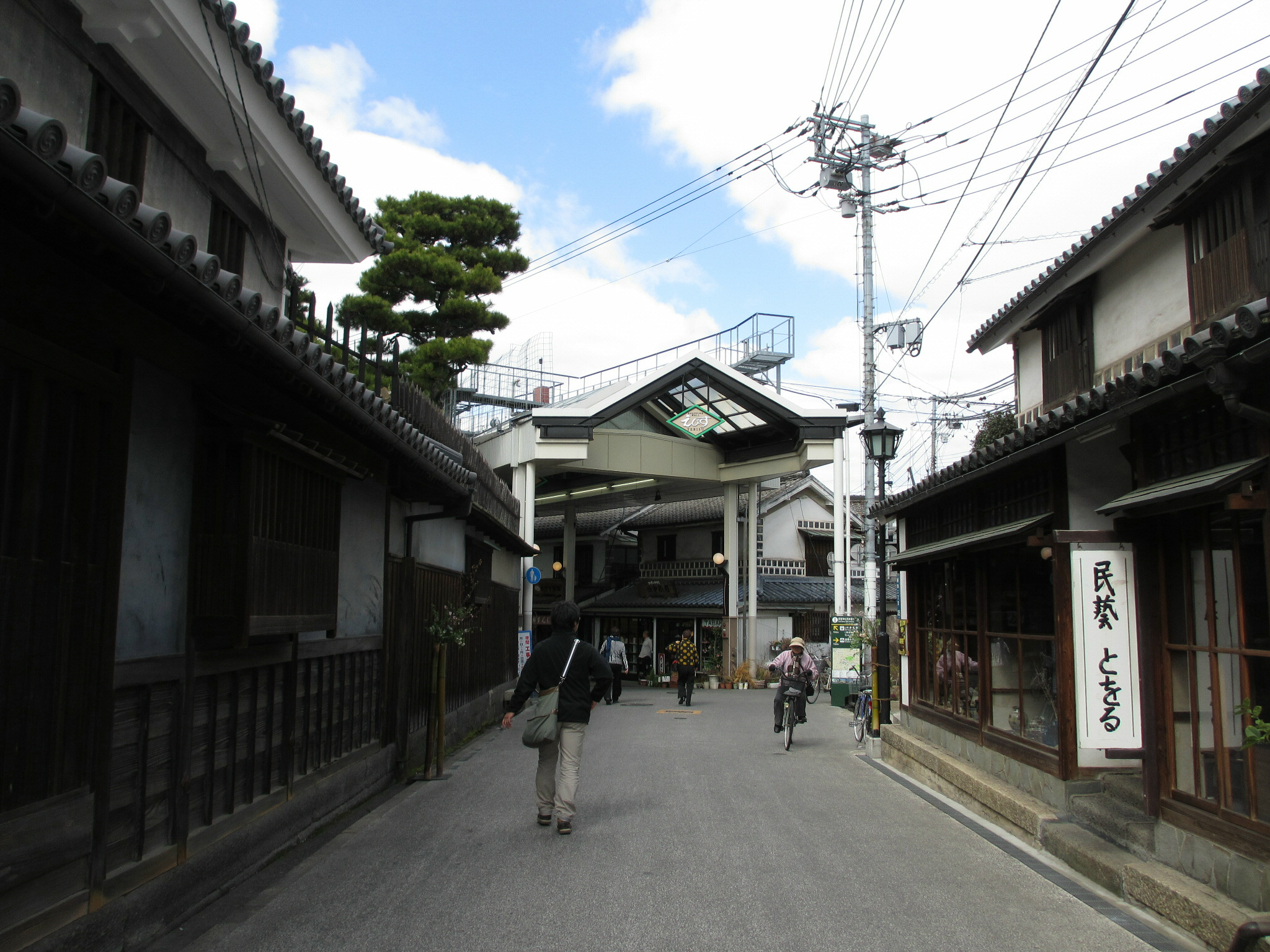
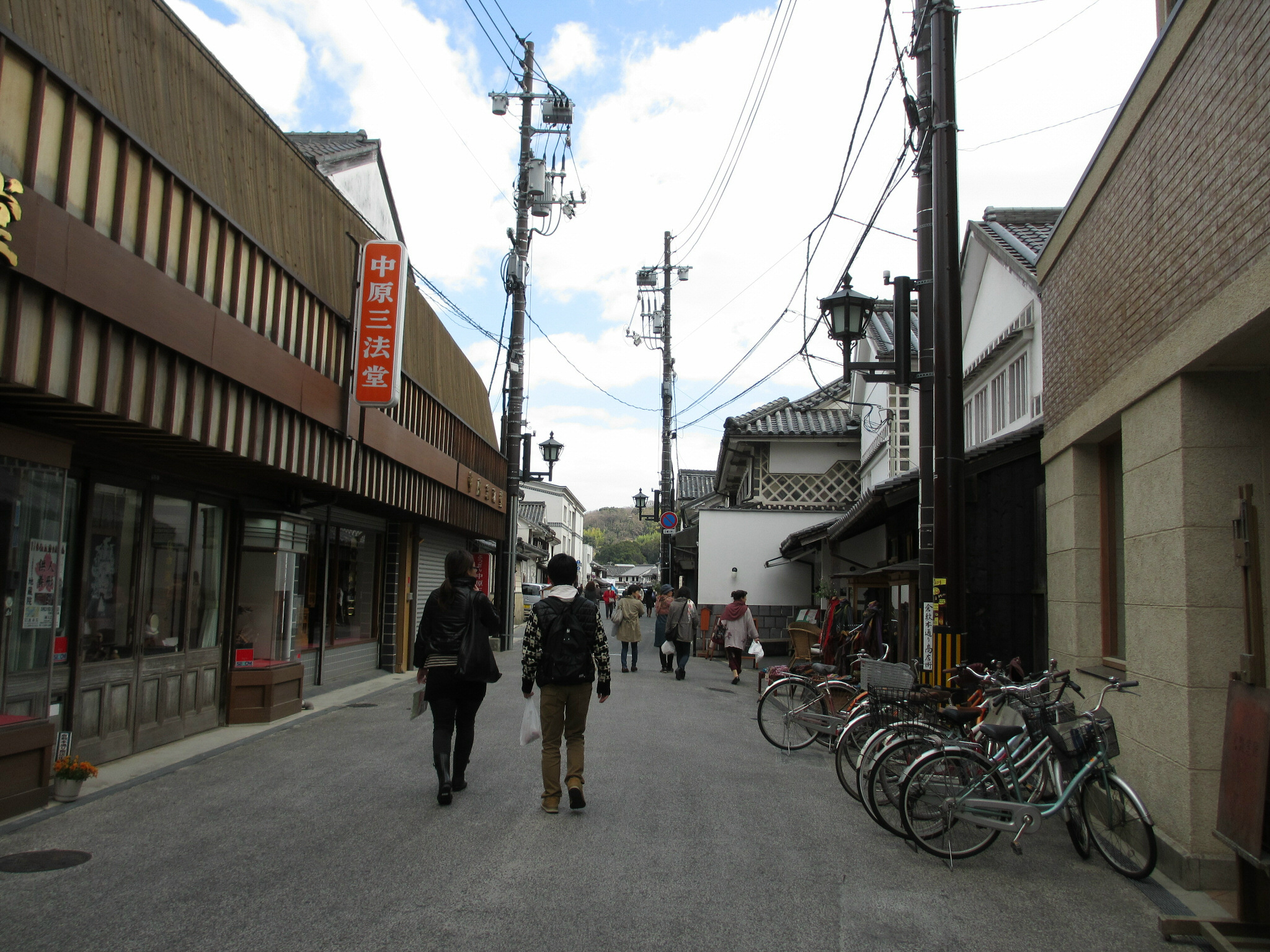
The photographs show Hondori's shopping-street approach, with original uploads dated October 2013. They provide historical street context, not a current tenant inventory or photographs of Nyochikudo's shelves. Keep your bags close in narrow shops and avoid leaving a suitcase where another customer needs to pass. If carrying luggage would dominate the visit, settle storage before beginning the shopping loop.
For glass or ceramics, ask about wrapping before paying and decide whether you can protect the object during the rest of your trip. Do not assume a shop can ship internationally, handle your destination's import rules or replace a breakage after you leave. For food gifts, read storage and expiry labels and check your destination's current import requirements. A gift is only practical when it can actually travel with you.
Finish with one purchase decision, not another circuit
Allow a final pause before the last transaction. Add up what you already bought, check how much bag space remains and decide whether the next item adds something different. Two nearly identical purchases may be intentional gifts, but buying duplicates because the next shop is attractive is a different decision. If you are choosing between a larger object and several small gifts, compare the total rather than the individual price tags.
Follow the official tenant directory for Hayashi Genjuro and Nyochikudo's own shop information for your next steps. Keep receipts and the maker's care instructions with any long-term purchase. Choose paper goods when sharing, weight and packing matter most; choose a durable craft object when its use and cost are clear to you. That gives the shopping walk a satisfying purpose without turning the historic quarter into a race through souvenir counters.
Research-based guide prepared by JAPANOVA. Traveler accounts are individual self-reports; comparisons are editorial analysis.
Facility and shop information
- Hayashi Genjuro Shoten — checked 2026-10-19
- Nyochikudo — checked 2026-10-19