A Kyoto hotel search becomes easier when you stop asking which neighborhood is best and ask which journeys you want to simplify. Kyoto Station can reduce the work around major rail arrivals and departures. Gion can be attractive when the streets and evenings you want are in that part of the city. Neither choice removes the need to travel across Kyoto, and the right room still matters as much as its district.
Choose Kyoto Station for rail and luggage convenience

Consider the station area when you have a short stay, substantial luggage or an early onward train. You are giving priority to the moments when a transfer is least appealing. That does not mean every property with Kyoto Station in its name is immediately beside the same exit. Check the entrance and the route from the actual service you will use.
Hotel Granvia Kyoto is a useful location example because its official access page describes a direct connection with JR Kyoto Station. Its directions explain different routes from the gates and the lobby level. Use that specificity as a standard when comparing any station hotel. Do not interpret an integrated location as proof of a particular room quality, current rate or effortless access from every platform.
Choose Gion for the parts of Kyoto you want to walk
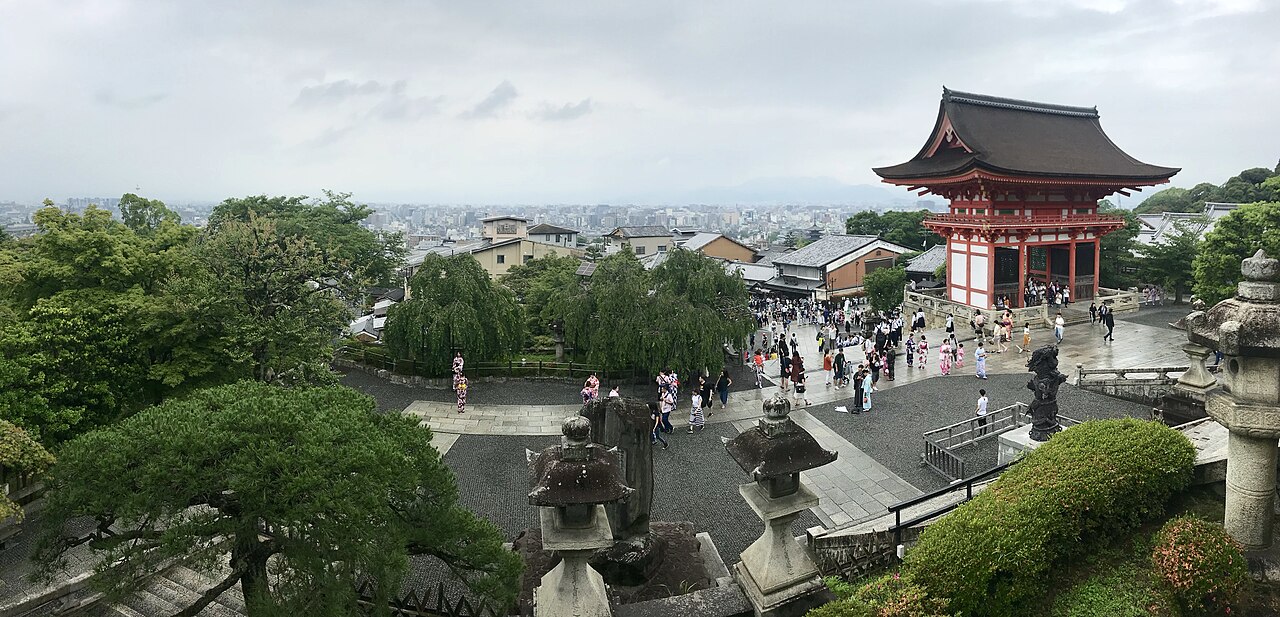
Give Gion serious consideration when your selected evening walks, dinners and eastern-city outings repeatedly lead you there. The advantage you are buying is proximity to your own plans. Do not choose it solely because a guide describes it as atmospheric; identify the actual streets and destinations you expect to use, then look for a property that connects them sensibly.
Granbell Hotel Kyoto provides a concrete access example near Gion-Shijo, with official directions from that station and Kyoto Kawaramachi. Its page names the railway lines and exits. This matters because a nearby station is not necessarily the same railway as the one serving your arrival. A hotel near a Keihan or Hankyu station still requires a separate plan from the shinkansen at Kyoto Station.
Two guests explain what convenience can mean
In a 2024 discussion, one guest staying near Gion liked the walking options and nearby restaurants but described transferring with rolling luggage from Kyoto Station as work. A different guest staying near Kyoto Station liked that base, while saying they had not done much around the station itself. Their satisfaction came from different benefits, rather than proving that one area suits everybody.
The useful question is which inconvenience you would rather accept. You might tolerate an arrival transfer for evenings near your preferred streets, or accept more journeys during the stay in exchange for simpler luggage handling. These are individual reports, not a representative survey, and neither verifies the two example hotels above. Use their contrast to test your priorities instead of copying a booking.
Look beyond the hotel neighborhood label
Map the exact entrance and check which side of a road, river or station it occupies. Read the property's own directions and look for a route appropriate to your luggage and mobility needs. A straight-line distance to a neighborhood center is not enough. If a taxi is your intended arrival plan, include it when comparing the total rather than assuming you will make a difficult walk.
If you want a quiet room, ask about the specific room position rather than expecting an entire district to be quiet or lively at all times. If returning late, check the property's entrance arrangements. If you plan a particularly early outing, inspect how you will reach it from both candidates. A romantic-looking location should still work at the hours you intend to leave and return.
Check what the room rate actually buys
Compare identical occupancy, bed configuration, smoking status and cancellation conditions. Confirm the total for your nights, including any taxes or charges the booking says will be collected separately. Do not use an old review's nightly price as an estimate of your own stay. A room that excludes an important feature is not equivalent to another that includes it.
Before paying, verify check-in timing, luggage storage and any amenity that is central to your choice. Use the selected room description, not a photograph of a different category. If the booking terms are restrictive, make sure your travel dates and arrival plans are settled enough for that commitment.
Make the final choice with three journeys
Compare arrival to hotel, hotel to your most important outing, and hotel to departure. Add your likely return after dinner. Choose Kyoto Station when rail and luggage convenience dominate; choose a Gion address when the repeated city experiences justify the transfer. Keep the hotel for the stay unless moving solves a specific problem. The aim is a base that serves your Kyoto days, not a neighborhood label that sounds right in isolation.
Research-based guide prepared by JAPANOVA. Traveler accounts are individual self-reports; comparisons are editorial analysis.
Facility and shop information
- Hotel Granvia Kyoto / JR West Hotels — checked 2026-10-19
- Granbell Hotel Kyoto — checked 2026-10-19